America's answer comes with a key to your kid's diary
A new US bill would hand parents the full record of their teen's AI conversations. My first reaction was 'that is a good thing!' My second reaction is this post.

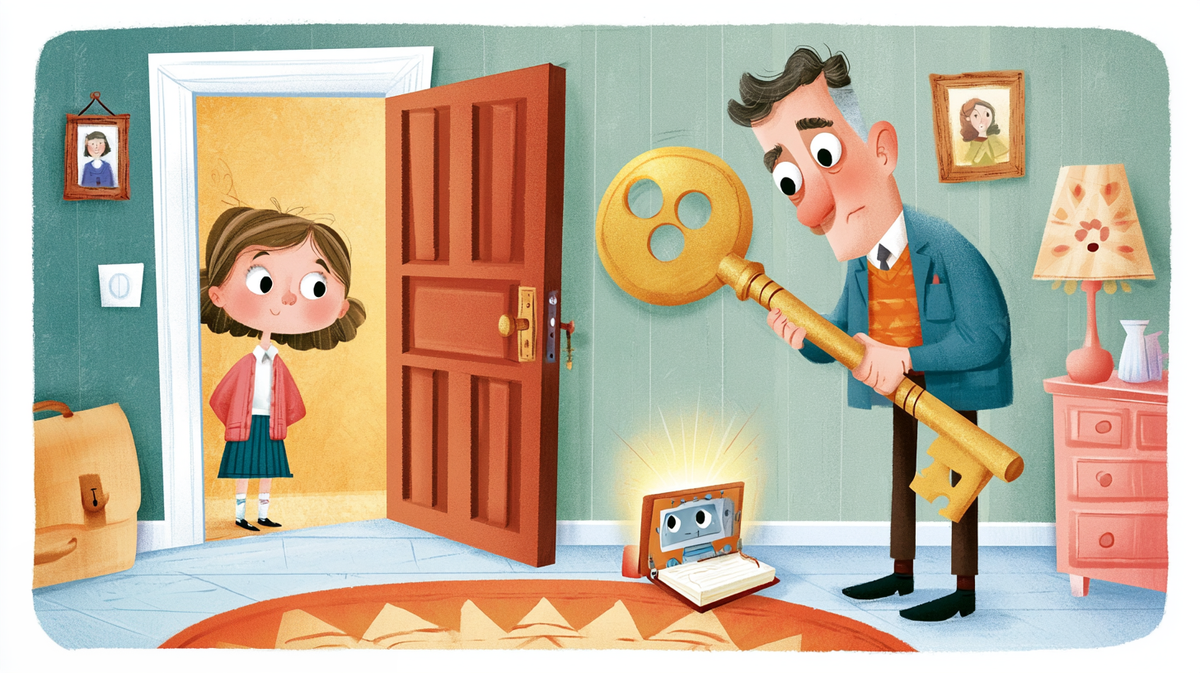
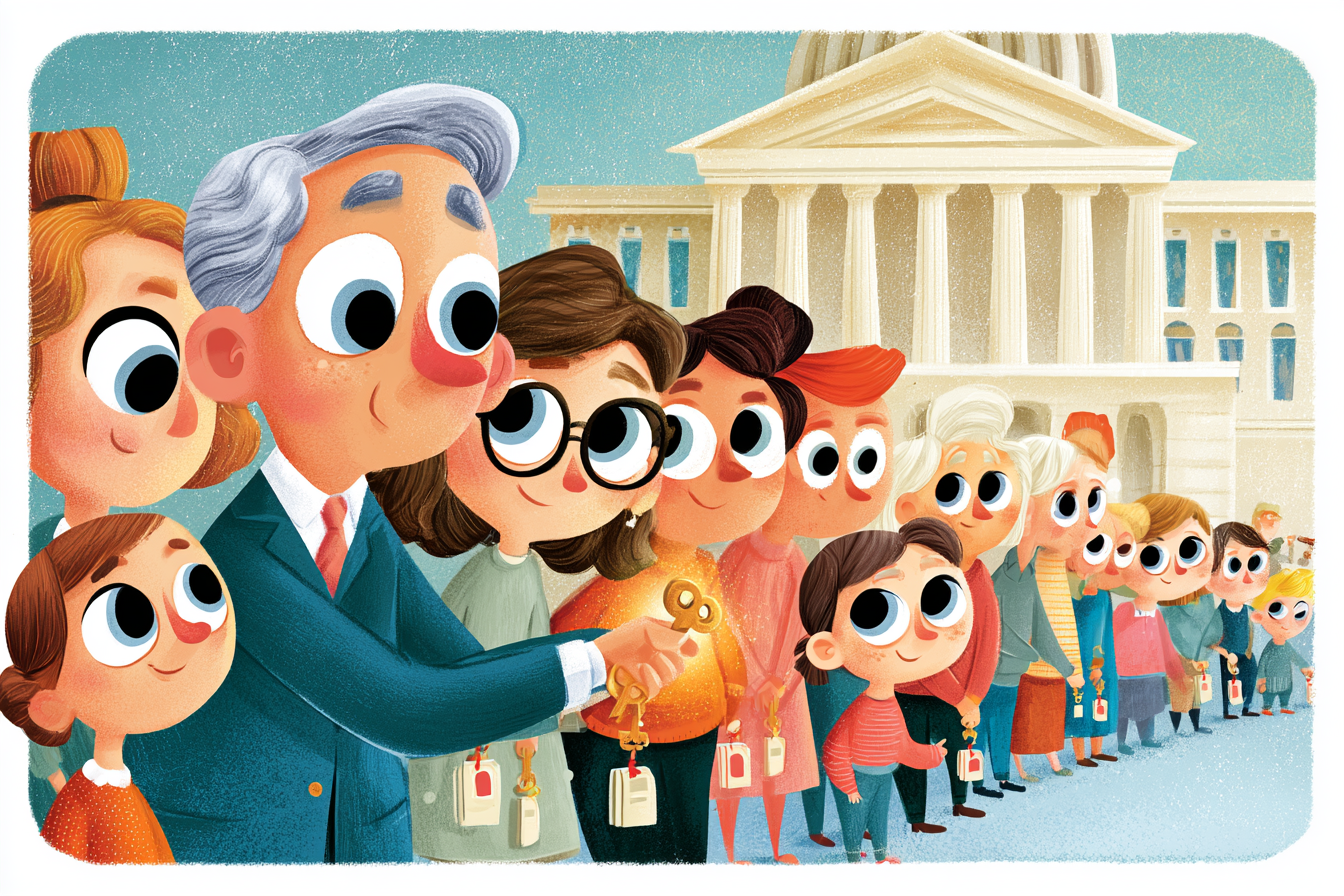
Two weeks ago I wrote about Europe's answer to kids and AI: a law that walks into your kid's school and asks the adults to actually understand the technology they're handing out. This week America answered too, and the American answer looks very different. It doesn't walk into the school. It walks into your house, hands you a key, and says: here, this opens your teenager's chat history.
I have three daughters. The oldest is sixteen, which means she is exactly the kind of user this new law is written for. And I'll be honest with you before I'm honest with Congress: when I first read what this bill would give me as a parent, something in me said yes, finally. That reaction is worth examining, because I think it's wrong.
What actually happened this week
On August 5, the U.S. Senate Commerce Committee advanced four bills about kids' online safety in a single session, most of them by voice vote with support from both parties. The headline names are the Kids Online Safety Act, the Youth AI Privacy Act, a bill about AI-enabled toys, and the one I want to talk about: the CHATBOT Act.
The CHATBOT Act, introduced by Senators Cruz and Schatz, would require AI companies to build "family accounts." Kids under 13 could only use a chatbot through an account monitored by a parent. Teens between 13 and 17 would need parental consent to create an account at all, and any teen account outside a family plan would automatically get the strictest safety settings. Chatbots would be required to make reasonable efforts not to show minors obscene content or anything that facilitates suicidal ideation, and to refer struggling kids to crisis resources.
So far, so reasonable. You could even call parts of it overdue.
Then you read what the family account actually contains. According to the bill text, parents get access to a "full record of the conversations and activity" of their teen, plus tools to "monitor, analyze, and understand, at scale" those conversations. If the teen tries to bypass or disable the parental controls, the parent gets an alert.
Read that again. Not a summary. Not a safety flag when something goes wrong. The full record, of every conversation, with analysis tooling on top.
A chat log with an AI is closer to a diary than a browser history.
What the numbers really say
To understand why this matters, you have to know what kids actually do with chatbots, and here the data is uncomfortably clear.
Common Sense Media published its first annual census on youth AI use in June: 1,204 American kids between 9 and 17. The headline number is that 86 percent of them use AI, but the interesting numbers sit underneath. More than half of the kids who use AI have asked it for advice about their health or their body. Over a third have discussed their feelings or personal problems with it. Among those kids, a quarter say the AI sometimes understands them better than most people do. And more than 4 in 10 say no parent or guardian has ever talked with them about AI safety.
Put those findings next to the CHATBOT Act and you see the collision coming. The conversations kids have with AI are not search queries. They are the questions a 14-year-old is too embarrassed to ask out loud: about her body, her friendships, her fears, the things she's ashamed of. Those are precisely the conversations that a "full record" would expose, and precisely the conversations that stop happening the moment a teenager knows her parents can read along.
The Electronic Frontier Foundation, which opposes the bill, makes a point that stuck with me: Congress isn't offering parents an optional tool here. It's mandating one specific model of parenting, surveillance by default, for every family in the country. Families that trust their teens, families that don't, families with an anxious 13-year-old and families with a nearly-adult 17-year-old: same architecture for all of them. And once that archive of deeply personal teenage conversations exists, it exists. Hackers, custody lawyers, and data breaches don't care that it was created with good intentions.
Before we panic
Panic is its own kind of laziness, so let's be precise about what this is and isn't.
This is not law yet. A committee vote is an early station on a long track, and bills like this get amended, stalled, and rewritten. The version that survives, if any does, may look quite different.
It's also not a stupid bill written by people who hate teenagers. Some of it is genuinely good: default-safe settings for minors, crisis referrals, real consequences for companies that let chatbots romance children. Anyone who read my earlier piece about AI companions knows I don't think the risks are imaginary. Kids have been hurt. Parents who lost children are sitting in those committee rooms, and they are not wrong to demand action.
The question was never whether to protect kids. The question is whether a permanent, analyzable archive of your daughter's most private questions protects her, or just reassures you.
The most dangerous conversations are not the ones you can't read. They're the ones that stop happening.
Where this gets uncomfortable for me
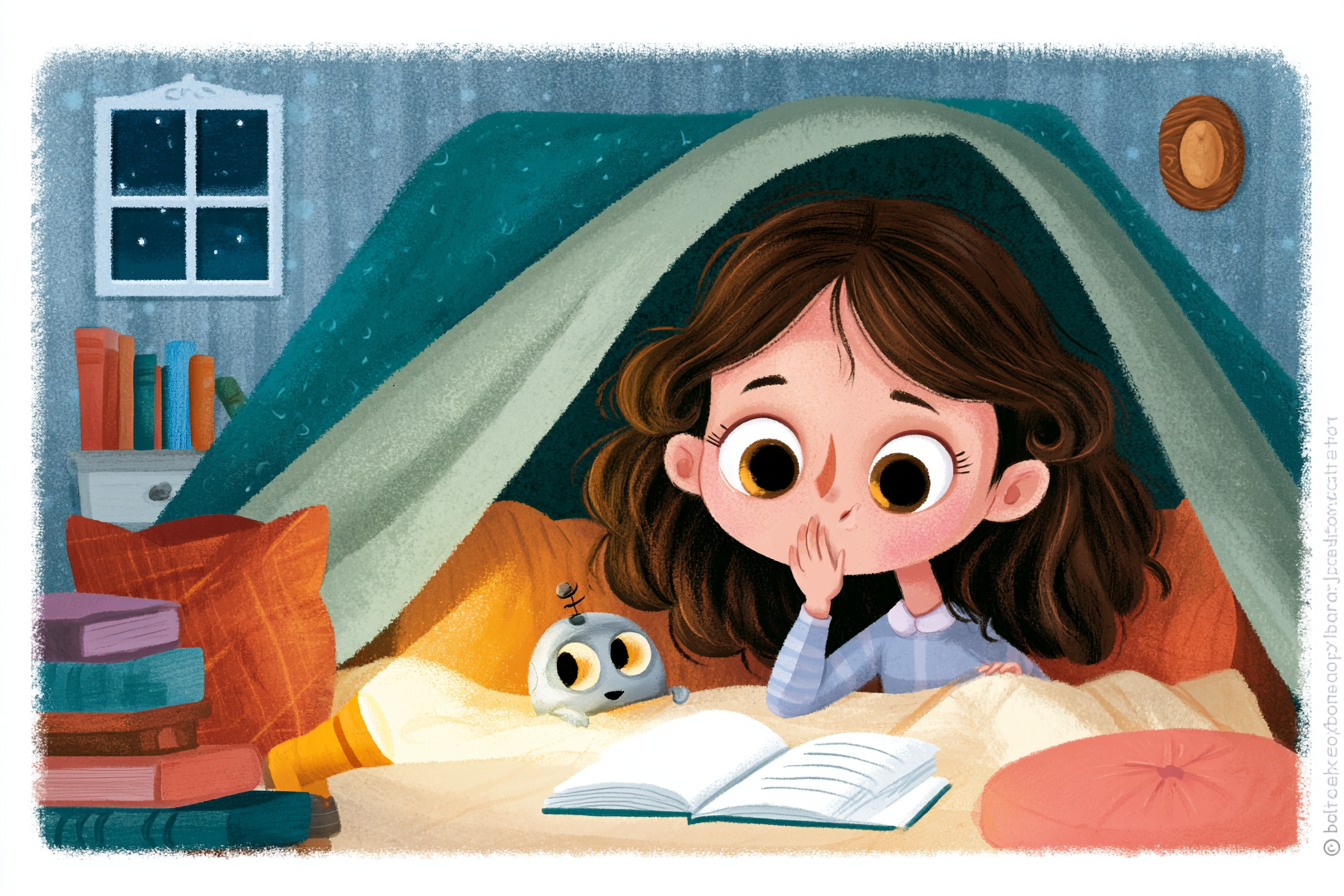
Here's the part I'd rather skip. When I imagined having that key, my first instinct wasn't civil-libertarian outrage. It was curiosity. What does my sixteen-year-old actually ask an AI at eleven at night?
And I already do things that sit on this same spectrum. We have rules about whether accounts on TikTok and Instagram are public or private, and I know roughly which platforms my daughters are on. Every parent draws a monitoring line somewhere, and pretending otherwise is its own kind of dishonesty. So I can't claim clean hands and I won't. The difference, I think, is between watching the doors and reading the diary. I want to know which rooms my kids walk into. I don't want a transcript of what they whisper once they're inside, because the moment I have it, they'll know I have it, and the whispering will simply move somewhere I can't follow at all.
What we're trying at home
As always: this is a direction, not a system. Take what's useful.
Ask the law's question before the law does. I want to put the question directly to my daughters at dinner: "If I could read everything you ask an AI, what would change?" Not as a threat, as a genuine question. I suspect the honest answer ("I'd stop asking it real things") is the whole argument against the bill, delivered free of charge by a teenager. And then ask yourself the same question, because it works both ways: would you be comfortable if everything you typed was archived and monitored, your searches, your questions, your half-formed thoughts at midnight? I don't know a single adult who would say yes. It's strange how quickly we prescribe for our children what we would never accept for ourselves.
Trade surveillance for office hours. The Common Sense numbers say kids take health and body questions to AI because it's available and doesn't judge. I can't out-google a chatbot, but I can be askable. We keep repeating one line at home: you can bring me anything, and the embarrassing questions are the ones I'll be proudest you asked.
Review settings together, not secretly. If the bill passes, family accounts arrive whether we like them or not. The version of this I can live with is sitting next to my daughter while we choose the settings together, out loud, so the oversight is something done with her instead of to her.
Keep one channel truly private, on purpose. Tell your teen explicitly which spaces you will never read: her journal, her chats with friends, and yes, in our house, her AI conversations. Privacy that's granted deliberately teaches more about trust than privacy that's merely not yet taken away.
Privacy that's granted deliberately teaches more about trust than privacy that's not yet taken away.
The line I'm keeping
Europe's answer was to educate the adults. America's answer, at least this draft of it, is to deputize them. I understand the impulse and I even share the fear behind it, but I keep coming back to what the key actually costs. My daughters are going to have conversations I never see, with people and with machines. That was always true, for every generation. The job was never to read everything. The job is to be the person they come to when the conversation gets too heavy for the machine.
I'd rather be the follow-up conversation than the surveillance report.
Sources
- Commerce Committee Advances Kids Online Safety Legislation — U.S. Senate Commerce Committee, August 5, 2026
- The CHATBOT Act Forces One Parenting Model On Every Family — Electronic Frontier Foundation, July 31, 2026 (updated August 5)
- S. 4407, CHATBOT Act — Congress.gov
- Common Sense Media Census: AI Use by Tweens and Teens — Common Sense Media, June 8, 2026
Raising kids in the AI age
This is part of the "Raising Kids in the AI Age" series. I'm a dad with three daughters, not an expert. I'm figuring this out as I go — and writing about it so you don't have to start from zero.
 Daniel Plomp
In this series
- The question we should stop asking our kids
- Your daughter's photo is one app away from being fake-naked
- Preparing children for a post-scarcity world
- Your kid trusts ChatGPT more than Google. That's a problem
- The AI conversations your kids are already having (And how to join them at dinner)
- Why banning ChatGPT from schools backfires
- What is bias in AI? A parent's guide to explaining fairness in algorithms
- AI Slop is destroying your kid's brain (and YouTube won't stop it)
- While you worried about screen time, your teen found something worse
- The 22% therapist
- Europe's answer walks into your kid's school on August 2
- The ad that pretends to be your friend
- Learn to think before you learn to prompt
- The talk we're not having
- The friend who never goes on holiday
- The answer machine your kid can't turn off
- The eleven-point gap
- America's answer comes with a key to your kid's diary ← You are here