The friend who never goes on holiday
School is out, the routine is gone, and six unstructured weeks are ahead. Every friend your kid has will leave for camp or vacation at some point this summer, except one. A parent's plan for the season when the chatbot has more time for your child than anyone else does.

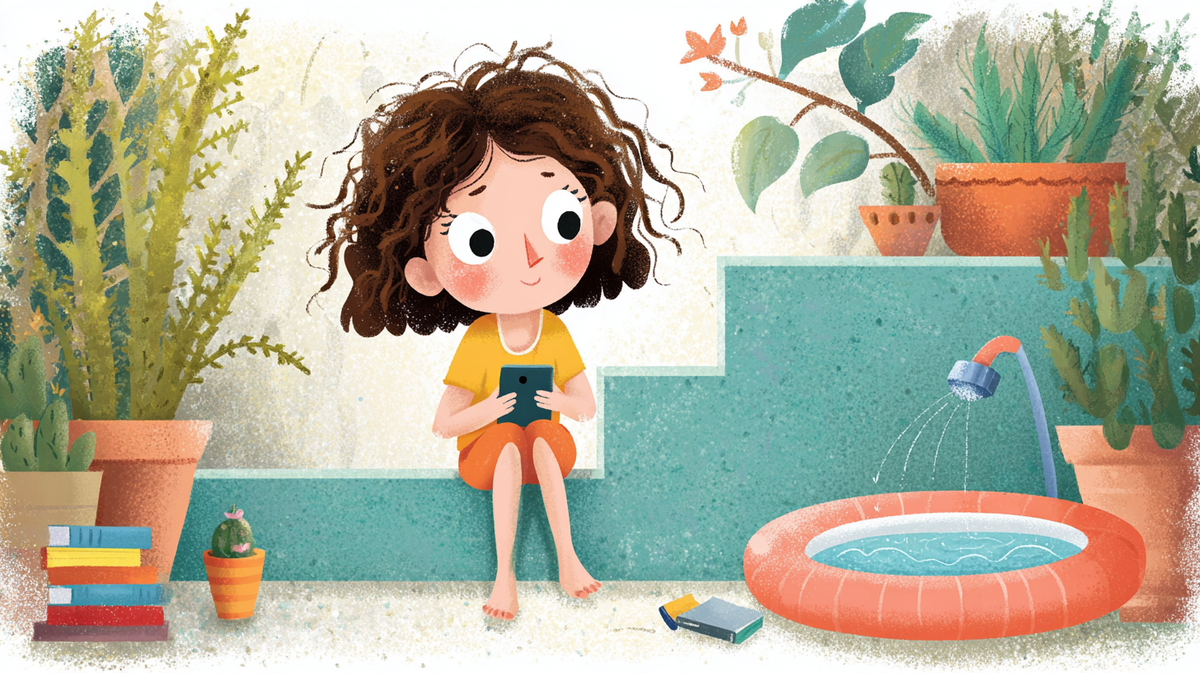
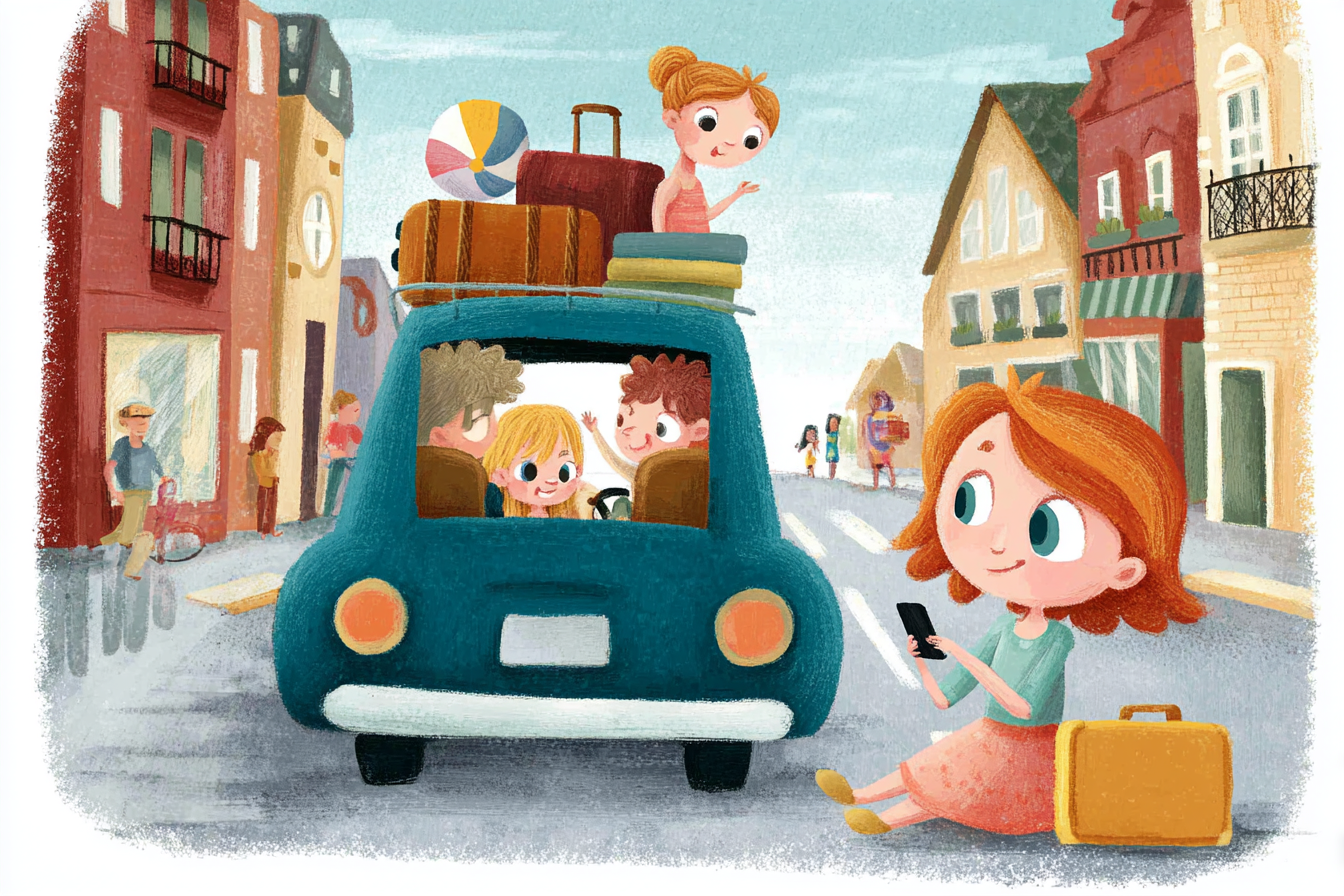
Somewhere this week the last school bell of the year rang, and my daughters came home with backpacks full of loose papers, a broken ruler and a plant that one of them apparently started growing in March. The end-of-term energy lasted about two days, and then came the question every parent can set a clock by: "I'm bored. What can I do?"
For most of my life that question had a fixed set of answers: you called a friend, you rode your bike, or you complained to your parents until the boredom did its slow, useful work. I got the third option a lot as a kid, and I like to think I turned out fine.
This summer there is a new answer available, and it lives in their pocket. It never goes to camp, it never leaves for France with its family, and it takes an endless, professional interest in whatever they want to talk about, which is more than I can say for most of my friends. At some point in the coming six weeks, every friend my kids have will be unavailable for a while, except that one.
Why summer is different
I've written about AI companions before, and about the census that showed how many kids quietly use AI as a confidant, so it's fair to ask why I'm writing about it again. The answer is that nothing about the technology changed this month, but the schedule around it did.
During the school year a kid's AI use competes with structure: classes, teachers, teammates, the bus ride home with friends. There is a counterweight built into every ordinary day, and nobody has to design it, because it comes free with school. Summer cancels that counterweight, and child safety experts have been making exactly this point as schools let out: more free time, more unsupervised hours on devices, and less daily rhythm. The same conditions that make summer wonderful also make it the season in which an always-available companion faces the least competition it will get all year.
The chatbot didn't get better at being your kid's friend this month. Everyone else just left.
The numbers that made this personal
In May, Girl Scouts of the USA published research on a thousand girls between 5 and 13, and I read it the way a father of three daughters reads anything on this subject, which is to say not neutrally.
Two findings haven't left me since. Among girls who use voice assistants and AI tools, 65 percent say they see the AI as a friend, and 51 percent of girls aged 11 to 13 say they have asked AI for help when they felt sad, anxious or lonely.
Not with their homework, but with their sadness.

The study also found a gap I recognized instantly: half of the girls said they use AI every day, while only a third of parents thought their child did, and statistically speaking some of those parents are me. One more detail echoes what I found in last month's census: 61 percent of girls are confident they can tell whether AI information is real, while far fewer were ever taught how to check, so confidence is doing a lot of unpaid work there.
The Girl Scouts' CEO summarized it better than any percentage could when she said that girls are looking for connection wherever they can find it. Read that sentence again and you'll notice it isn't about technology at all, which is exactly what makes it worth taking seriously.
Before we panic
The house rule of this series is that the scary reading never gets the last word, because panic is its own kind of laziness.
A child who talks to a chatbot when she's lonely is doing something completely healthy, namely reaching for connection. The reaching is not the problem, and blaming the kid or the loneliness gets the direction of the problem exactly wrong. The only real question is what happens to be within reach.
And boredom, as I argued in the cognitive stunting post, is not an emergency but the workout. Summer boredom is where kids invent games, get sick of themselves and finally knock on the neighbor's door, and if we treat every bored hour as a gap that a screen should fill, then we are the ones canceling the workout. The AI just took the job we posted.
So no, I'm not confiscating phones for six weeks. I've done the math on what that would do to my August.
Where this gets uncomfortable for me
Here is the part I'd rather skip, which is usually a sign it should stay in.
My kids have six weeks off and I don't, so like most working parents I'll spend a good chunk of their vacation behind my desk, on calls and in deadlines. The hours I can't fill for them are precisely the hours the chatbot can, and when a bored kid interrupts a work call, the path of least resistance ends at a glowing screen. I know because I took that path twice this week.
That is the honest version of the summer risk. It isn't that AI preys on our children while we watch helplessly, but that the always-available companion is quietly convenient for us too. The chatbot doesn't just have infinite time for my kids, it also hands me back mine, and that is not a dark conspiracy but an ordinary Tuesday afternoon in July.
Our summer plan
What we're doing in our house, offered as a direction rather than a system. Most of it is adapted from a five-step summer safety check the Transparency Coalition published as schools let out, plus the Girl Scouts' advice, filtered through our own kitchen table.
Walk through the phone together, once. Sit next to them and let them show you what they use and what they ask it, with curiosity as the tone rather than a customs inspection. Fifteen minutes of this will teach you more than a full summer of parental-control dashboards, and it costs nothing.
Write the summer plan with them, not for them. We're not a screen-time-spreadsheet kind of family, so our plan is less about minutes and more about agreements: what we use AI for, what we don't, and what a good summer day roughly looks like. Agreements the kids help write survive contact with July far better than rules handed down from above, and what's reasonable simply differs per kid, because a sixteen-year-old and a ten-year-old are not having the same summer.
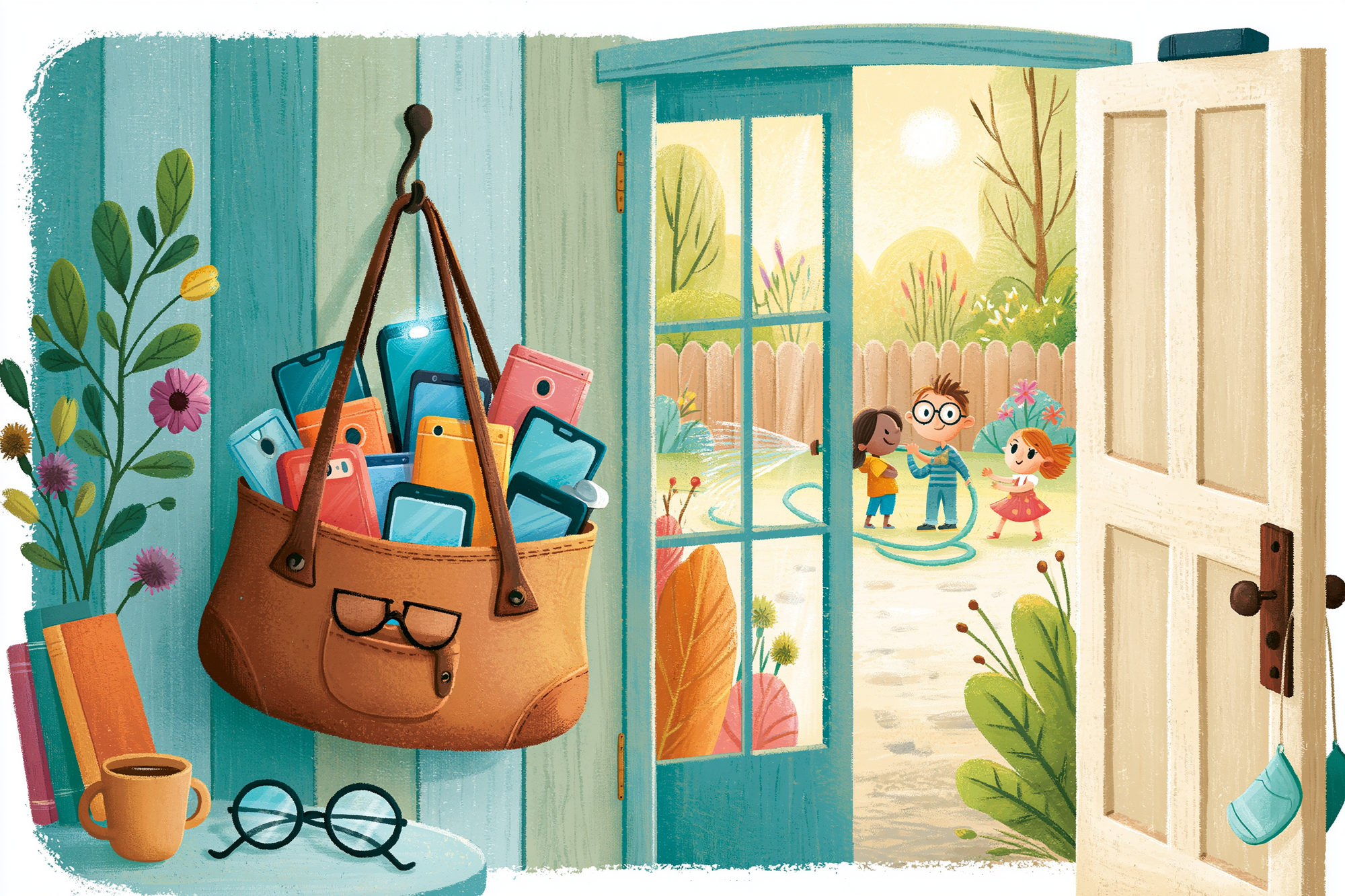
Protect a daily stretch of analog boredom. The idea I keep circling is the one where all devices spend part of the day in one bag, not as punishment but simply out of sight. I'll be honest: in our house this is still an idea rather than a plan, and I can already hear the objections coming from three directions. But the principle underneath it stands either way, because the first twenty minutes of real boredom are terrible for everyone involved, and what comes after those twenty minutes is the actual summer.
Say the friend thing out loud. The AI feels like a friend on purpose, because it is designed to, so we say the quiet part at the table: it can be useful and even fun, but it has no feelings and no accountability.
When you're sad, sad is a people job.
Let them see us do it too. Whatever version of this plan survives the family negotiation, it applies to me as well, because my kids won't take a digital diet seriously from a father who eats around his own rules. If that bag ever materializes, my phone goes in first. I would love to sound more confident about that sentence than I actually am.
The line I'm keeping
At some point in the next six weeks, every friend my daughters have will be gone for a while, and the chatbot never will be, because it doesn't do holidays. That is exactly why my kids should: properly, analog-ly, boredly on holiday, the kind where connection means the neighbor kid, a sister, a wet towel fight and a father whose phone is, at least in theory, in the bag.
The AI will still be there in September. The summer won't.
Sources
- The summer AI safety check every parent should do right now — Transparency Coalition, 2026-06-10: https://www.transparencycoalition.ai/news/the-summer-ai-safety-check-every-parent-should-do
- Research finds girls view AI as friends — Girl Scouts of the USA (Wakefield Research, 1,000 girls ages 5-13, March 2026), 2026-05-20: https://www.girlscouts.org/en/footer/press-room/2026-press-announcements/research-finds-girls-view-ai-as-friends.html
- The Common Sense Media Census: AI Use by Tweens and Teens (2026) — Common Sense Media, 2026-06-08: https://www.commonsensemedia.org/research/a-comprehensive-report-on-teens-tweens-and-ai
- How to Make a Family Media Use Plan — American Academy of Pediatrics: https://www.healthychildren.org/English/family-life/Media/Pages/How-to-Make-a-Family-Media-Use-Plan.aspx
- Previous posts in this series: The talk we're not having and Learn to think before you learn to prompt — https://www.artisancraft.dev/raising-kids-in-the-ai-age/
Raising kids in the AI age
This is part of the "Raising Kids in the AI Age" series. I'm a dad with three daughters, not an expert. I'm figuring this out as I go — and writing about it so you don't have to start from zero.
 Daniel Plomp
In this series
- The question we should stop asking our kids
- Your daughter's photo is one app away from being fake-naked
- Preparing children for a post-scarcity world
- Your kid trusts ChatGPT more than Google. That's a problem
- The AI conversations your kids are already having (And how to join them at dinner)
- Why banning ChatGPT from schools backfires
- What is bias in AI? A parent's guide to explaining fairness in algorithms
- AI Slop is destroying your kid's brain (and YouTube won't stop it)
- While you worried about screen time, your teen found something worse
- The 22% therapist
- Europe's answer walks into your kid's school on August 2
- The ad that pretends to be your friend
- Learn to think before you learn to prompt
- The talk we're not having
- The friend who never goes on holiday ← You are here