The eleven-point gap
New research asked parents what their kids do with AI, then asked the kids. The parents guessed 11 points too low. Not because kids hide it, but because AI use is invisible. Why this is a calibration problem, not a crisis, and the dinner table game we're trying instead of monitoring software.

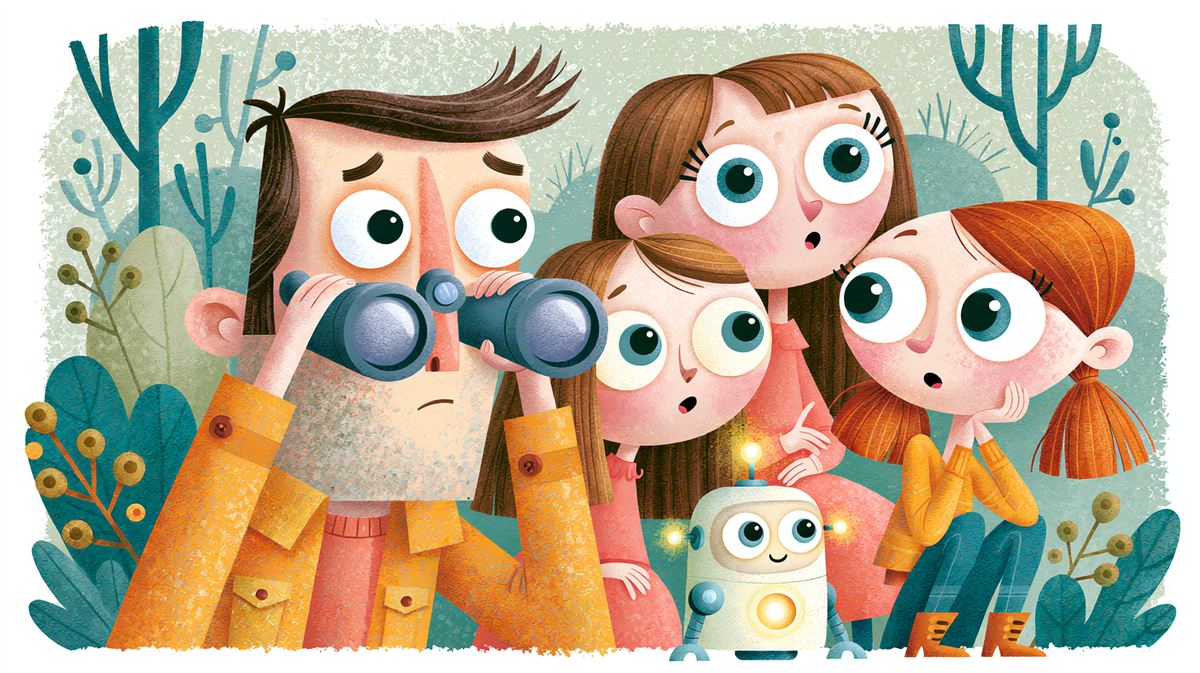
I write a weekly series about raising kids in the AI age, which means people occasionally assume I know what my own children do with AI. Last week someone asked me exactly that, what my daughters had used AI for in the past few days, and I produced a fluent answer that I realized halfway through was mostly a description of what they were doing three months ago. Confidence is what parents produce when we don't actually know something.
It turns out I have plenty of company. Two weeks ago the Family Online Safety Institute published the fourth wave of its online safety survey, and its central finding is a gap. Not a dramatic one, not the kind that makes the evening news, but a persistent eleven-point gap between what parents think their kids do with AI and what the kids themselves report. And unlike most tech-and-kids research, this one hands parents something better than worry: a number that tells you how far off your own guess probably is.
What the study actually found
The report, called Beyond Borders, was fielded by Ipsos this spring among more than 4,000 parents and children aged 10 to 17 in the United States and Australia. The setup is simple and slightly devious: they asked parents whether their child had used generative AI in the past week, and they asked the children the same question about themselves. Twenty-seven percent of parents said yes. Thirty-eight percent of children said yes.
That gap is the widest one in the study, but it is not an AI-only phenomenon. The same pattern shows up across nearly every online activity they measured, from scrolling social media to posting on it, and it even holds for schoolwork, the one category parents tend to file under acceptable and therefore assume they have in view. Kids consistently report doing more than their parents report for them.
Kids consistently report doing more online than their parents know. The widest gap is around AI, the newest thing in the house.
Two other findings deserve a spot next to that number. First, AI use among American kids has stopped climbing: after rising thirteen points between fall 2024 and fall 2025, it has flattened out at roughly three-quarters of kids. This is not a wave that will pass if we wait politely. It is the new baseline. Second, parents' optimism that AI might actually help keep kids safe online dropped ten points over the same period, which means parents are simultaneously less aware of what's happening and less hopeful about it. That combination deserves a moment of honest discomfort.
What the numbers really say
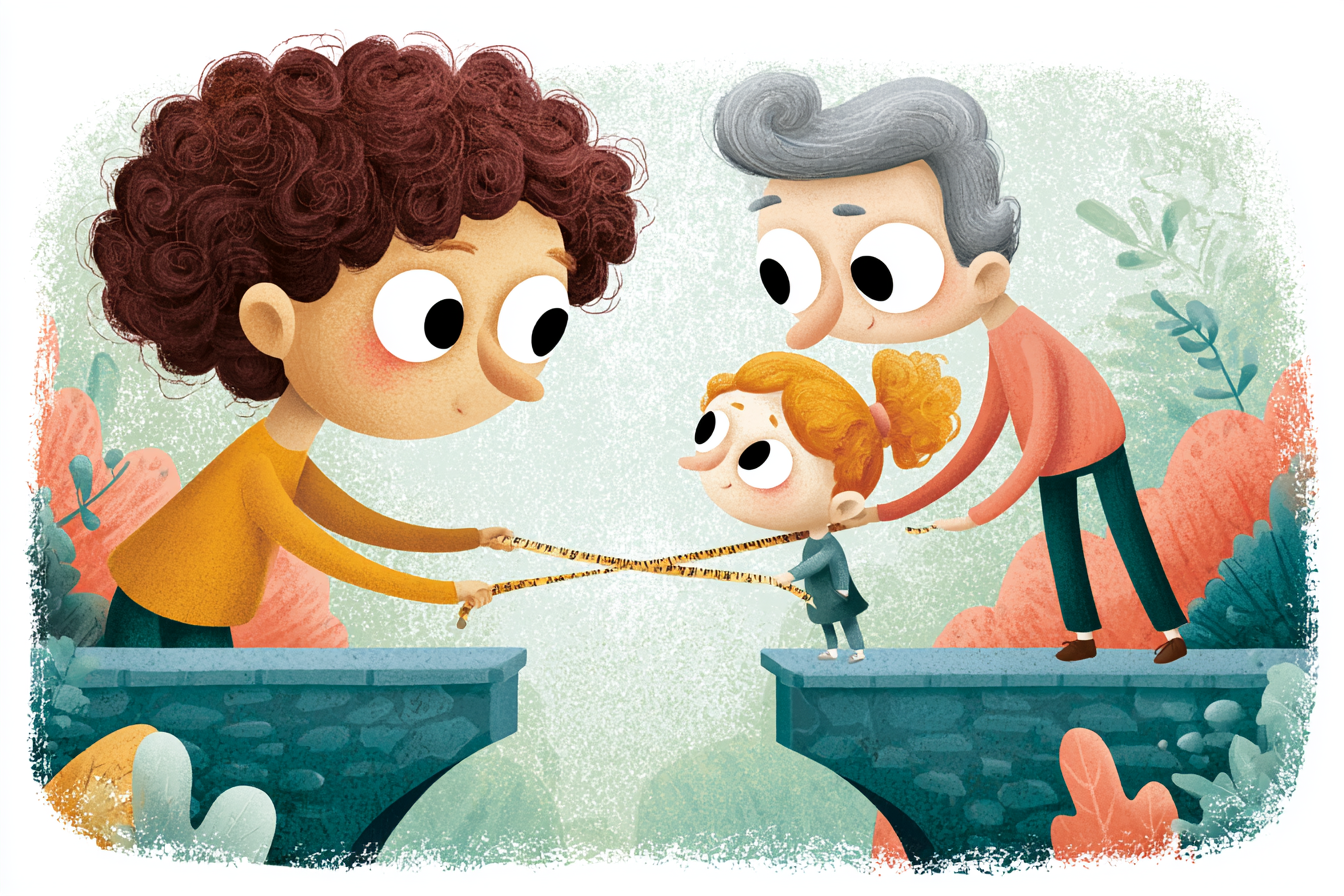
The tempting reading is that our kids are hiding things. I don't think the data supports that, and the same report quietly argues against it: nine in ten children say they feel they can talk to their parents if something online makes them feel unsafe, and over ninety percent of both kids and parents agree that parents are the ones responsible for online safety education. These are not the numbers of a generation sneaking around behind our backs.
The better explanation is less flattering to us. AI use is simply invisible. A kid scrolling TikTok looks like a kid scrolling TikTok, and you can catch it from across the room. A kid asking a chatbot to explain a math problem, rewrite an awkward message or settle an argument looks like a kid doing homework. There is no feed to glance at over a shoulder, no notification sound, no tell. The gap is not a deception problem. It is a visibility problem, and visibility problems don't get solved by watching harder.
One footnote worth knowing before you quote this study at a birthday party: the research is supported by Disney's wellness grant program and TikTok, and FOSI's members include Apple, Google and Roblox. I read industry-funded research the way I read a menu written by the chef. That said, a finding that says parents don't know what's going on hardly flatters the industry either, and it lines up with what Pew found among American teens earlier this year, so I'm inclined to believe the shape of it.
The gap is not a deception problem. It is a visibility problem, and visibility problems don't get solved by watching harder.
The case against panicking
Panic is its own kind of laziness, and this study is a particularly bad excuse for it.
Eleven points is not a chasm. It means that for every nine parents who know, roughly one extra parent doesn't, plus a margin of parents whose picture is simply out of date. That is not a crisis. That is a calibration error, and calibration errors are among the most fixable problems in parenting because the fix is a conversation rather than a confiscation.
The study even tells us which tools parents already trust. Across every device category, families are more likely to have household rules than technical parental controls, and the families that do use controls mostly say they work. But the strongest tool in the whole report is the boring one: kids who feel they can come to their parents. We already have the infrastructure. We're just not running anything on it.
Meanwhile, the people whose job is panicking professionally are busy: American state legislatures passed 84 AI laws in the first half of this year, and children's safety around chatbots has become one of the loudest themes in those chambers. I covered Europe's version of this a few weeks ago. The lawmakers are doing their part at their speed. The eleven points are ours.
Where this gets uncomfortable for me
Here is the part I would prefer to skip. I audit my daughters' chatbots. I audited the search box last week in this very series. I have opinions about AI literacy that I publish on a schedule. And if you had made me write down, before reading this study, what each of my three daughters used AI for in the past seven days, I am fairly sure I would have scored somewhere around the average parent, which is to say: wrong, and confident about it.
There is a second asymmetry that stings more. If you asked my kids what I use AI for, they would probably say "everything" and be done, which means my actual thinking, the judging and discarding and double-checking, is exactly as invisible to them as their AI use is to me. The gap runs in both directions in our house. Only one direction made it into a research report.
I would have scored somewhere around the average parent, which is to say: wrong, and confident about it.
What we're trying at home
A direction, not a system.
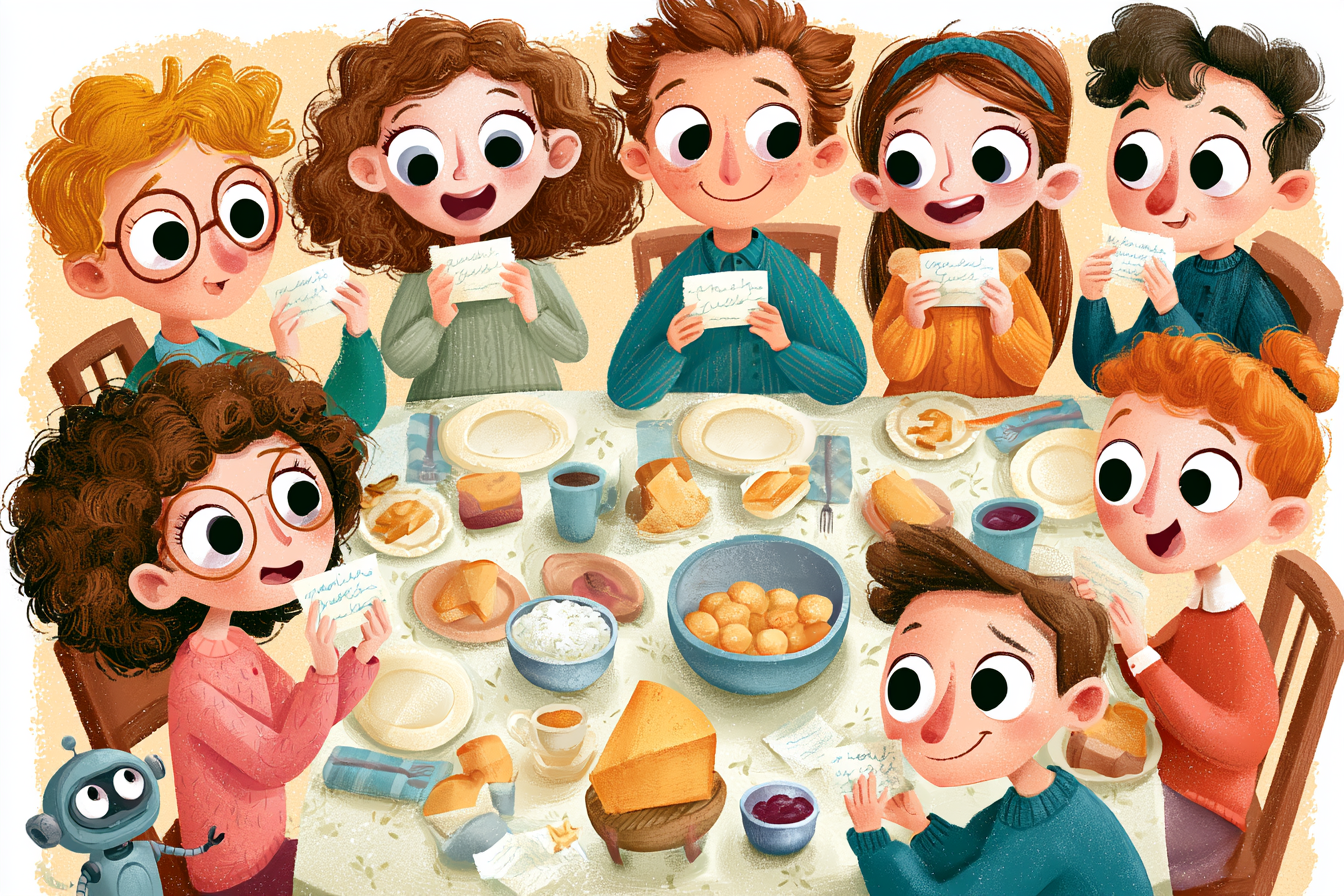
The guessing game. Everyone at the table writes down what they think the person next to them used AI for this past week. Then everyone answers for themselves. Score it like a quiz, laugh at the results, and don't attach a single consequence to anything revealed. The point is calibration, not investigation, and the moment it becomes an interrogation the nine-in-ten number stops applying to you.
Make it a boring question. "What did AI help you with this week?" asked in the same tone as "how was school", at the same low frequency, with the same tolerance for a shrug. The study says kids will talk to us. Kids answer boring questions more honestly than important ones.
One rule beats one more control. Families already lean on household rules over parental controls, and rules have a property controls lack: they travel across devices, and they apply to parents too. Ours will have to, see above.
The line I'm keeping
I don't want to close the eleven-point gap with monitoring software, because the study's most hopeful number, the nine in ten kids who say they'd come to us, was built by years of conversations and could be spent in a single afternoon of surveillance. Knowledge about my kids should keep coming from my kids.
I don't need to be right about my daughters. I need to be current.

Sources
- FOSI — Beyond Borders: U.S. and Australian Families on Online Safety, Screen Use, and the Digital Lives of Kids (press release, July 9, 2026) — https://www.webnewswire.com/2026/07/10/parents-are-underestimating-their-kids-digital-lives-especially-with-ai-new-family-online-safety-institute-research/ — full white paper at https://fosi.org
- Pew Research Center — How Teens Use and View AI (February 24, 2026) — https://www.pewresearch.org/internet/2026/02/24/how-teens-use-and-view-ai/
- Transparency Coalition — 84 New State AI Laws Signal Growing Momentum for Child Safety and Accountability (July 21, 2026) — https://www.prweb.com/releases/84-new-state-ai-laws-signal-growing-momentum-for-child-safety-and-accountability-302830374.html
Raising kids in the AI age
This is part of the "Raising Kids in the AI Age" series. I'm a dad with three daughters, not an expert. I'm figuring this out as I go — and writing about it so you don't have to start from zero.
 Daniel Plomp
In this series
- The question we should stop asking our kids
- Your daughter's photo is one app away from being fake-naked
- Preparing children for a post-scarcity world
- Your kid trusts ChatGPT more than Google. That's a problem
- The AI conversations your kids are already having (And how to join them at dinner)
- Why banning ChatGPT from schools backfires
- What is bias in AI? A parent's guide to explaining fairness in algorithms
- AI Slop is destroying your kid's brain (and YouTube won't stop it)
- While you worried about screen time, your teen found something worse
- The 22% therapist
- Europe's answer walks into your kid's school on August 2
- The ad that pretends to be your friend
- Learn to think before you learn to prompt
- The talk we're not having
- The friend who never goes on holiday
- The answer machine your kid can't turn off
- The eleven-point gap ← You are here