What is bias in AI? A parent's guide to explaining fairness in algorithms
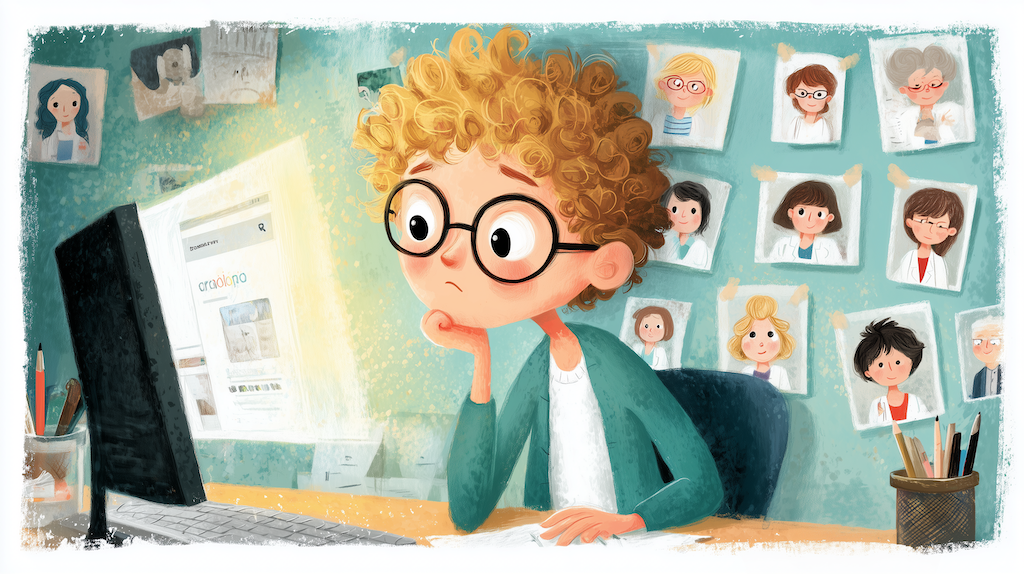
Your 12-year-old comes home from school and casually mentions that their friend got "different" search results when looking up "CEO" or "nurse" on Google Images. They're puzzled. You're... well, you should be too.

Welcome to one of the most important conversations you'll have with your kids about AI: bias. Not the obvious kind where someone is deliberately unfair, but the sneaky kind that hides in algorithms and training data.
The kind that shapes what your kids see as "normal."
The mirror problem
Here's the thing about AI bias that most explanations miss: AI doesn't create bias. It amplifies what's already there.
Think of AI as the world's most persistent mirror. It looks at millions of examples of human behavior, decisions, and content, then reflects back what it sees. If the world it's shown is skewed, the reflection will be skewed.
For younger kids (roughly ages 8–11): "AI learns by looking at lots and lots of examples. If most of the examples show doctors as men, AI might think that's normal, even when it's not."
For older kids and teens (roughly ages 12 and up): "Training data is like AI's textbook. If the textbook only has certain types of examples, AI will think that's how the world actually works."
The tricky part? Sometimes this happens without anyone meaning for it to.
Where bias hides (and why it matters to your kids)
1. Visual search results
Try this with your kids: search for "programmer," "teacher," "pilot," and "nurse" in Google Images. Look at the gender and racial representation. Ask your kids what they notice.
What you're actually seeing: The visual history of internet stock photos, job listings, and media representation.
Why it matters: These images shape expectations. If your child only sees male programmers in search results, what message does that send about their future possibilities?
2. Recommendation algorithms
Platforms like YouTube and TikTok don't just show your kids content — they shape what your kids think is worth consuming. (A quick note: these platforms have a minimum age of 13, and YouTube offers a separate YouTube Kids app designed for younger children. If your child is under 13, it's worth steering them toward age-appropriate alternatives.)
The echo chamber effect: If your kid watches a few videos about a particular hobby, sport, or viewpoint, the algorithm doubles down. Soon, they're seeing a very narrow slice of reality.
For parents: Pay attention to what your kids are being recommended. With teenagers, try approaching their "For You" page together out of genuine curiosity rather than as a check-up — frame it as "I'm interested in what the algorithm thinks you like" rather than "show me what you've been watching." The goal is a shared exploration, not surveillance; if it feels like an inspection, most teens will shut down. The algorithm is essentially telling them what people "like them" are supposed to be interested in.
3. Voice assistants and language
When voice assistants like Alexa, Siri, and Google Assistant first launched, they typically defaulted to female voices — reinforcing ideas about who serves and who commands. Today, Apple and Google offer a range of voice options including male and gender-neutral voices, and some no longer preselect a female voice by default. The fact that these defaults are changing shows that these design choices were never neutral to begin with.
Simple exercise: Ask your kids why they think early AI assistants were given female voices, and what it means that companies are now offering more choices. Listen to their answers. You might be surprised by what they've already internalised.
Real talk: The training data problem
Here's where it gets interesting (and a bit frustrating): most AI bias isn't simply malicious. In many cases it stems from taking shortcuts — relying on whatever data is cheapest and most readily available, which often reflects existing inequalities. The web content that's easiest to scrape tends to overrepresent certain demographics, languages, and viewpoints, while underrepresenting others. That means bias isn't just a matter of carelessness; it's also driven by structural and economic factors that shape which data gets collected in the first place.
AI systems are trained on web scrapes and existing databases. This data carries the biases of its creators and the time periods it comes from.
Example your kids will understand: Imagine an AI like ChatGPT learning about jobs from newspaper articles from the 1950s. It would learn that secretaries were predominantly women, reflecting the gender-segregated workplace roles of that era. That's not so different from what actually happened: early AI image generators trained on decades of stock photos produced images of CEOs that were overwhelmingly white and male.
The modern version: AI trained on internet content from recent decades learned some things that were already outdated by the time the AI was deployed.
What this means for your family
Your kids aren't just consuming AI-generated content. They're also creating data that feeds back into the systems they use.
Here's how that works in practice: say your teenager searches for "best careers in tech," clicks on the top three results, and skips the rest. That click pattern gets logged. Over time, thousands of similar clicks signal to the search engine which pages are "relevant" — and those pages become more prominent in future results. If the most-clicked results happen to show a narrow picture of who works in tech, that narrow picture gets reinforced. The same principle applies to social media: every like, share, and watch-to-the-end tells the algorithm what counts as engaging content, which shapes what gets shown to the next person.
What your kids do today shapes what AI will treat as "normal" tomorrow.
That's both daunting and empowering.
What's being done about it
It's worth knowing that researchers and tech companies are actively working to reduce bias in AI systems. Approaches include "red teaming," where teams deliberately try to provoke biased or harmful outputs before a system is released; building more diverse and representative training datasets; and conducting independent audits of AI systems to test for unfair outcomes. These efforts don't eliminate bias, but they show that this is a recognized problem with real work behind it — and that the tools your kids use today are already better in some ways than earlier versions.
What you can do as a parent
Beyond talking with your kids, there are things you can do yourself when you encounter bias. Most platforms and AI tools have feedback or reporting mechanisms — use them. If a search engine consistently returns skewed results, try an alternative and compare. You can also support organizations that advocate for algorithmic transparency and fairness. These small actions signal to companies that users notice and care, and they help create the kind of accountability that leads to better systems over time.
Hands-on exercises to try with your kids
Exercise 1: The search experiment (ages 8 and up)
Together, search for different professions in Google Images. Count:
- Gender representation
- Racial diversity
- Age ranges
Ask: "Do these results match the real world? Why or why not?"
Exercise 2: The recommendation audit (ages 12 and up)
Have your teenager show you their YouTube or TikTok recommendations. Ask:
- "Why do you think you're seeing this content?"
- "What kind of person does the algorithm think you are?"
- "What's missing from these recommendations?"
Exercise 3: The training data thought experiment (ages 15 and up)
Pick an AI tool your teenager uses (ChatGPT, character.ai, etc.). Ask:
- "Where do you think this AI learned to respond this way?"
- "What would happen if it was trained only on content from your school? Your friend group? Your family?"
The questions your kids should be asking
Instead of teaching your kids to distrust AI (impossible and impractical), teach them to think critically about it:
Before using AI tools:
- "What might this AI be good at? What might it be bad at?"
- "Who built this, and what did they want it to do?"
After getting AI results:
- "Does this feel right? What might be missing?"
- "Would this answer be the same for everyone?"
When seeing AI in the wild:
- "Who benefits from this recommendation/result/decision?"
- "What would someone who disagrees with this say?"
Why this conversation matters more than you think
Your kids are growing up in the first generation to have AI-powered everything: search, social media, homework help, entertainment, and eventually, job applications and loan decisions.
Understanding bias isn't just about being a thoughtful digital citizen. It's about navigating a world where algorithms increasingly decide what opportunities your kids see.
The goal isn't to make them paranoid. It's to make them curious.
When your son notices that the coding bootcamp ads on his Instagram feed always show men, he should wonder why — and then click anyway if coding interests him.
When your daughter realizes that the AI homework assistant gives different examples based on the name she puts in the prompt, she should understand what that reveals about the data the AI learned from.
Looking ahead
AI bias isn't a problem that gets solved once and forgotten. New models, new training data, new use cases mean new forms of bias.
The kids who understand this — who can spot bias, question recommendations, and think critically about algorithmic decisions — will have a massive advantage.
Not just in using AI tools, but in building the next generation of them.
Raising kids in the AI age
This is part of the "Raising Kids in the AI Age" series. I'm a dad with three daughters, not an expert. I'm figuring this out as I go — and writing about it so you don't have to start from zero.
 Daniel Plomp
In this series
- The question we should stop asking our kids
- Your daughter's photo is one app away from being fake-naked
- Preparing children for a post-scarcity world
- Your kid trusts ChatGPT more than Google. That's a problem
- The AI conversations your kids are already having (And how to join them at dinner)
- Why banning ChatGPT from schools backfires
- What is bias in AI? A parent's guide to explaining fairness in algorithms ← You are here