The AI productivity trap: why your brain can't keep up with your tools
Three months ago, I felt like a productivity superhero. ChatGPT helped me draft emails, GitHub Copilot accelerated my coding, and Claude assisted with research. I was cranking out work faster than ever before. Then something shifted.


Despite producing more output, I felt cognitively exhausted by noon. My ability to think deeply about complex problems—the core of my work as a knowledge worker—had quietly eroded.
I wasn't alone. Across industries, professionals are experiencing the same paradox: AI makes us feel more productive while systematically destroying our capacity for sustained focus. While business leaders debate whether AI will replace jobs, they're missing the crisis happening right now. AI isn't just changing what we do, but it's rewiring how our brains work in ways that may not be sustainable.
The neuroscience of AI burnout
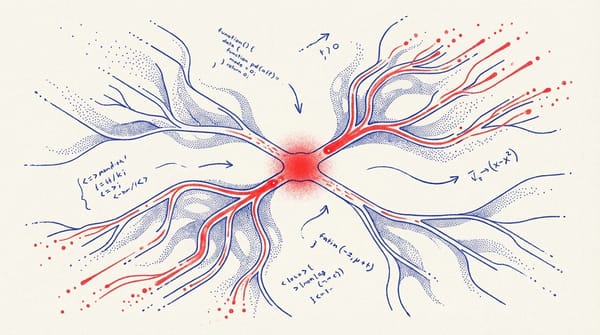
Your brain evolved sophisticated attention systems over millennia. The prefrontal cortex manages working memory and cognitive control through cycles of engagement and recovery. Intense focus creates "attention debt"—cognitive depletion that requires restoration.
Traditional work had natural recovery periods built in. Writing involved reflection moments. Reading had pauses. Even debugging code included thinking breaks. AI tools eliminate these rest periods by keeping you in constant decision-making mode.
AI-assisted work forces constant switching between cognitive modes within the same task. You're generating ideas, evaluating AI output, refining prompts, and integrating results simultaneously. Each transition depletes attention without providing recovery.
It's like running a marathon while constantly changing pace—exhausting in ways steady effort isn't.
So, what's wrong with that, you would ask?
The decision fatigue amplifier

What's weird is that tools designed to reduce cognitive load often increase a different type of mental strain: decision fatigue. Every interaction with an AI system requires a series of micro-decisions that accumulate throughout the day.
Consider a simple task like writing a project update. Without AI, you draft the email and send it. With AI assistance, you decide which tool to use, craft an initial prompt, evaluate the output quality, decide whether to refine the prompt or edit manually, integrate AI suggestions with your own knowledge, and finally assess whether the result matches your intent. Each decision point consumes executive function resources.
I've noticed this pattern in my own coding. Traditional coding involves extended periods of deep thinking punctuated by implementation. AI-assisted coding inverts this pattern, creating constant micro-interruptions for evaluation and decision-making, preventing the extended focus periods needed for complex architectural thinking.
The exhaustion doesn't come from the coding itself. It comes from constantly mediating between human intuition and AI suggestions—cognitive arbitration fatigue.
The always-on availability trap
AI assistants create an "always available" cognitive environment that fundamentally alters our attention patterns. This availability creates cognitive opportunity cost—the mental energy expended simply knowing that AI assistance is accessible.
The brain treats AI availability like a constantly ringing phone. Even when you're not using it, part of your attention system remains allocated to monitoring whether you should be using it, creating a baseline level of cognitive load that never fully dissipates.
This helps explain why professionals report feeling mentally drained even on days when they use AI tools minimally. The mere presence of AI assistance appears to alter our baseline cognitive state, preventing the complete attention restoration that occurs during periods of true cognitive rest.
The multitasking multiplication effect

AI tools don't eliminate multitasking—they make it more sophisticated and harder to recognize.
When using AI assistance, we're simultaneously maintaining awareness of our primary task objective, monitoring AI output for relevance and accuracy, formulating follow-up prompts or refinements, integrating AI suggestions with existing knowledge, and evaluating the overall quality of hybrid human-AI output.
This is multitasking about multitasking. We're not just juggling multiple tasks; we're managing multiple cognitive processes within each interaction with AI systems.
After extended periods of AI-assisted writing, I notice attention switching deficits that persist even after AI use ends. The brain's attention system needs time to consolidate and reset, but AI-assisted work prevents this consolidation, creating cumulative attention debt.
The recovery paradox
The efficiency increases that make AI adoption attractive, eliminate the natural recovery periods that sustain long-term cognitive performance.
Traditional deep work involves natural rhythms of intense focus followed by reflection and integration. Writing involves pauses for thinking, coding includes moments of architectural consideration, and analysis requires periods of synthesis. These apparent "inefficiencies" serve crucial cognitive functions—they allow attention systems to restore and consolidate information.
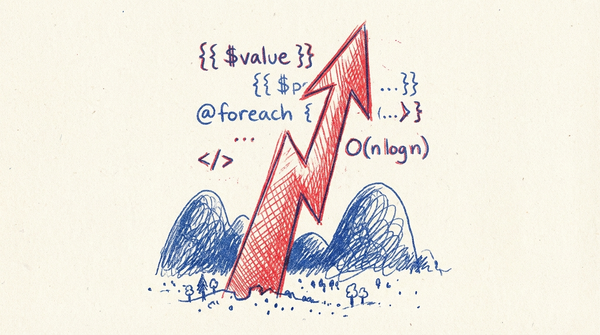
AI tools optimize for continuous output, eliminating what appears to be wasted time but is actually essential cognitive maintenance. The result is productivity debt—short-term output gains that compromise long-term cognitive capacity.
It's analogous to using stimulants to enhance performance—effective short-term, potentially costly long-term. You get immediate cognitive leverage that feels sustainable but gradually depletes the mental resources necessary for sustained knowledge work.
Recognizing the warning signs
Cognitive depletion from AI overuse shows up in weird ways that are easy to misattribute to other factors. I've learned to watch for these patterns:
- You have trouble maintaining focus on tasks without AI assistance. Your attention span during non-AI activities gets shorter. Simple decisions become harder—you overthink routine choices and feel overwhelmed by options that previously seemed manageable.
- You become cognitively inflexible.
Problems that don't fit AI-assistance patterns throw you off. You resist approaches that don't involve AI, even when they might be more appropriate. - Integration becomes difficult.
You struggle to synthesize information from multiple sources or see big-picture connections. Tasks requiring sustained abstract thinking feel unusually challenging. - You feel restless during periods without AI assistance and treat thinking time as inefficiency rather than necessity.
These symptoms often emerge gradually and may initially look like general work stress. But they specifically indicate that AI usage has exceeded your cognitive system's capacity for integration and recovery.
Designing sustainable AI usage

Understanding the neuroscience of AI-induced cognitive strain points toward usage patterns that preserve long-term cognitive health while maintaining productivity benefits.
I've started implementing cognitive cycling—alternating periods of AI-assisted work with periods of unassisted deep thinking. Forty-five to sixty minute cycles of AI use followed by fifteen to twenty minutes of reflection or non-AI work help both productivity and cognitive recovery.
Selective AI engagement works better than treating AI as a default problem-solving approach. I use AI for tasks that genuinely benefit from external input: information gathering, initial draft generation, and routine optimization. But I maintain human-only periods for strategic thinking and creative problem-solving.
Creating AI-free zones helps too. I designate specific times and spaces where AI tools aren't accessible. This allows attention systems to fully reset and prevents the cognitive opportunity cost associated with constant AI availability.
Integration time matters more than I initially realized. The goal isn't just to produce work with AI assistance but to learn and grow from the collaboration. I build explicit time for synthesizing and internalizing AI-assisted output.
Most importantly, I monitor cognitive load indicators and treat them as seriously as physical fatigue. Cognitive strain isn't a character flaw—it's a biological constraint that requires management.
The path forward
AI tools represent a shift in how we augment human cognitive capacity. Like any powerful technology, they require wisdom in application. The current approach—adopting AI tools as quickly as possible and maximizing their usage—ignores basic constraints of human cognitive architecture.
The solution isn't to abandon AI assistance but to develop sustainable integration patterns that respect both the capabilities of AI systems and the limitations of human attention. This requires treating cognitive health with the same seriousness we apply to physical health—recognizing that short-term performance gains mean nothing if they compromise long-term capacity.
The professionals and organizations that thrive with AI won't be those who use it most intensively, but those who learn to use it most wisely. This means understanding not just what AI can do, but what it costs—and ensuring that the cognitive price we pay today doesn't bankrupt our intellectual capacity for tomorrow.
In this series
This post is part of the disruptive-ai series:
- I watched a developer admit AI killed his business model. Here's why I'm not worried.
- I'm Living the AI Disruption Everyone's Warning About
- The hidden signs you're addicted to AI and why it's different
- The AI productivity trap: why your brain can't keep up with your tools (this post)

I offer hands-on consulting to help you resolve technical challenges and improve your CMS implementations.
Get in touch if you'd like support diagnosing or upgrading your setup with confidence.