The quiet data grab reshaping online recruitment
Indeed is changing the rules. Employers connecting their ATS must now share disposition data — information about what happens to candidates after they apply.


Indeed is changing the rules. Employers connecting their ATS must now share disposition data — information about what happens to candidates after they apply. This directly impacts privacy, costs, and control.
Time to look at what this means. And what alternatives exist.
What is disposition data exactly?
Most employers think "data sharing" means CVs and contact details. Disposition data goes further.
It includes:
- rawDispositionStatus — the internal status in your ATS
- rawDispositionDetail — why someone was rejected or hired
- applicationSourceName — which channel the candidate came through
This isn't aggregated data. These are specific records per candidate, per application.
Indeed becomes "data controller" instead of "data processor" through this. The difference? As controller, Indeed decides what happens with the data. Employers lose sovereignty.

Why is Indeed doing this?
The official reason: better matching algorithms. With more outcome data, Indeed can make smarter recommendations.
The practical reason: data is the new revenue model.
Michael Ang from CXR (Candidate Experience Research) summarized it: "Free is over — pay or share data." Indeed's free model has always run on something. Now it's clear what: your candidate data.
The market response
The recruitment community is reacting with mixed feelings. Some signals:
Cost increases CXR warns of cost increases up to 400% for employers who don't want to participate in data sharing. Indeed hasn't officially confirmed this, but the trend is visible.
ATS systems under pressure Applicant Tracking Systems are increasingly becoming a "commercial extension" of job boards. The integration with Indeed isn't neutral — it serves Indeed's data model.
GDPR complications In Europe, this is extra sensitive. When Indeed becomes data controller, responsibility shifts. But the employer remains liable for what happens with candidate data. A legal grey area.
The 40% opportunity
Here's where it gets interesting for employers.
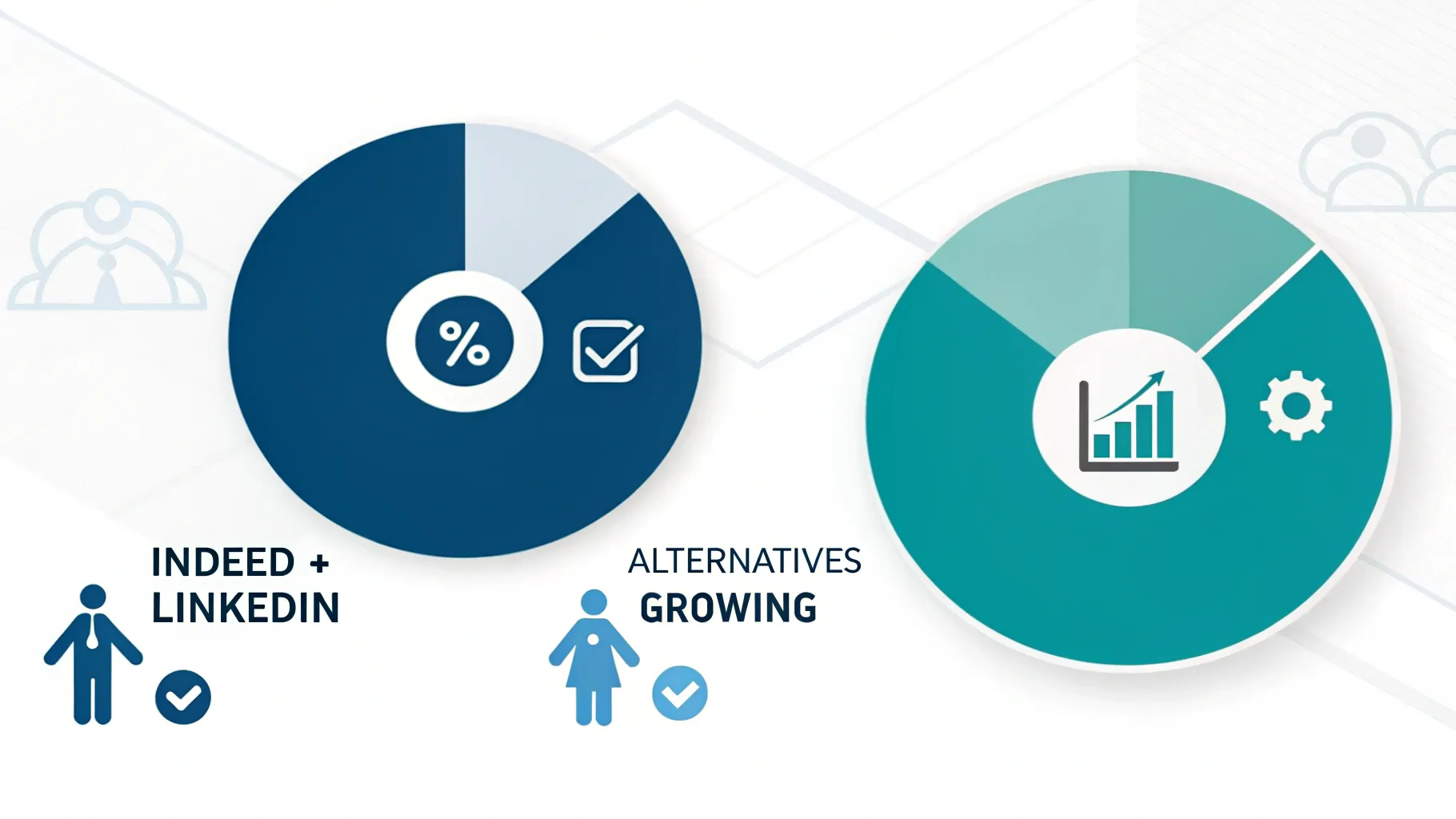
Indeed and LinkedIn together reach about 60% of active job seekers. That seems dominant. But it also means: 40% searches elsewhere.
That 40% is growing. Niche job boards are gaining ground. Privacy-first alternatives are getting more attention. Employers who don't want to depend on two American platforms are looking around.
This isn't an anti-Indeed story. It's a reality check. Diversification in your recruitment channels is no longer a luxury — it's risk management.
Privacy-first alternatives
There are platforms explicitly choosing a different model:
- No resale of candidate data
- Employer remains owner of applications
- Focus on quality over volume
Careerguide is one of them. No data sharing with third parties, no hidden revenue models. Employers keep control of their own recruitment process.
Other options include niche boards for specific sectors, regional platforms, and direct company career pages with good SEO.
What to expect
Indeed's current policy officially runs until "end of 2026". What comes after is unclear. But the direction is clear: more data, more control, less free.
For employers who take privacy seriously — and their candidates — this is the moment to explore alternatives.
Not because Indeed is bad. But because dependence on one platform is never smart. Especially not when that platform starts claiming your data.
Conclusion
The recruitment market is shifting. Indeed is choosing data maximization. That's their right. But employers have a choice too.
That choice starts with awareness. And ends with diversification.

I offer hands-on consulting to help you resolve technical challenges and improve your CMS implementations.
Get in touch if you'd like support diagnosing or upgrading your setup with confidence.