I tried AI once. It didn't work.
A recruiter I know told me last month that AI was "not for this industry."

I've been in the recruitment space for some time now, so I asked what he'd tried. "ChatGPT. Eight months ago. Asked it to screen some resumes. It missed obvious red flags. Completely useless."
Eight months ago.
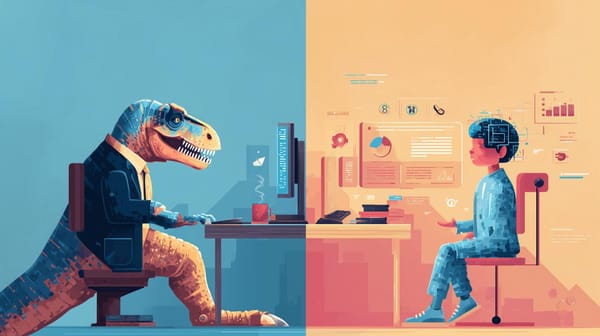
In AI time, eight months ago is the stone age. The models he dismissed have been replaced twice over. The thing he tested doesn't exist anymore. It's like someone test-driving a horse in 1910 and concluding cars will never work.
But I get it. I really do. If your one experience with something was bad, why would you go back? We all do this. I wrote off TikTok for two years because I thought it was just dancing teenagers. By the time I actually looked, half my industry was getting their news there.
The difference with AI is the speed. TikTok gave you years to catch up. AI gives you months. Maybe.
What changed in those eight months
Here's what happened since that recruiter's last login:
Claude went from a chatbot to something that makes PowerPoint decks, writes working code, browses the web, reads your files, and builds you actual software. Not toy demos. Software you'd pay for.
I watched a Dutch podcast recently where the hosts were discussing this. One of them mentioned Rutger Bregman, the author, who needed teleprompter software for recording videos. Instead of searching the App Store, he opened Claude Code, described what he needed, and had a working app minutes later. No subscription. No searching through review pages. No compromises on features he didn't want.
He just asked for what he needed and got it.
If you're building a SaaS product in a niche like that, this should keep you up at night. It keeps me up.
The four types of people right now
I see four groups when it comes to AI adoption, and three of them are in trouble:
The refusers. Haven't tried it, won't try it. "It's a fad." These people existed when the internet arrived too. Some of them still don't have a website for their business. They survived, mostly. AI will be less forgiving.
The disappointed. My recruiter friend lives here. Tried it once, got burned, moved on. The problem isn't that they tried. The problem is they think the thing they tried still exists. It doesn't.
The question-askers. This is the biggest group among people who actually use AI. They treat it like a search engine with better grammar. They type questions, get answers, and think that's the whole story. It's like buying a Swiss Army knife and only using the toothpick.
The builders. Small group. Getting smaller as a percentage every day, even though the absolute number grows. These people use AI to automate workflows, generate content, build prototypes, analyze data, write code. They're not asking AI what the weather is. They're telling it to build them a weather app.
The gap between group three and group four is where the money is. And it's widening fast.
The K-shaped split
Economists love their letter-shaped recoveries. V-shaped means everyone bounces back. L-shaped means nobody does. K-shaped is the uncomfortable one: some people go up, some go down, and they never meet again.
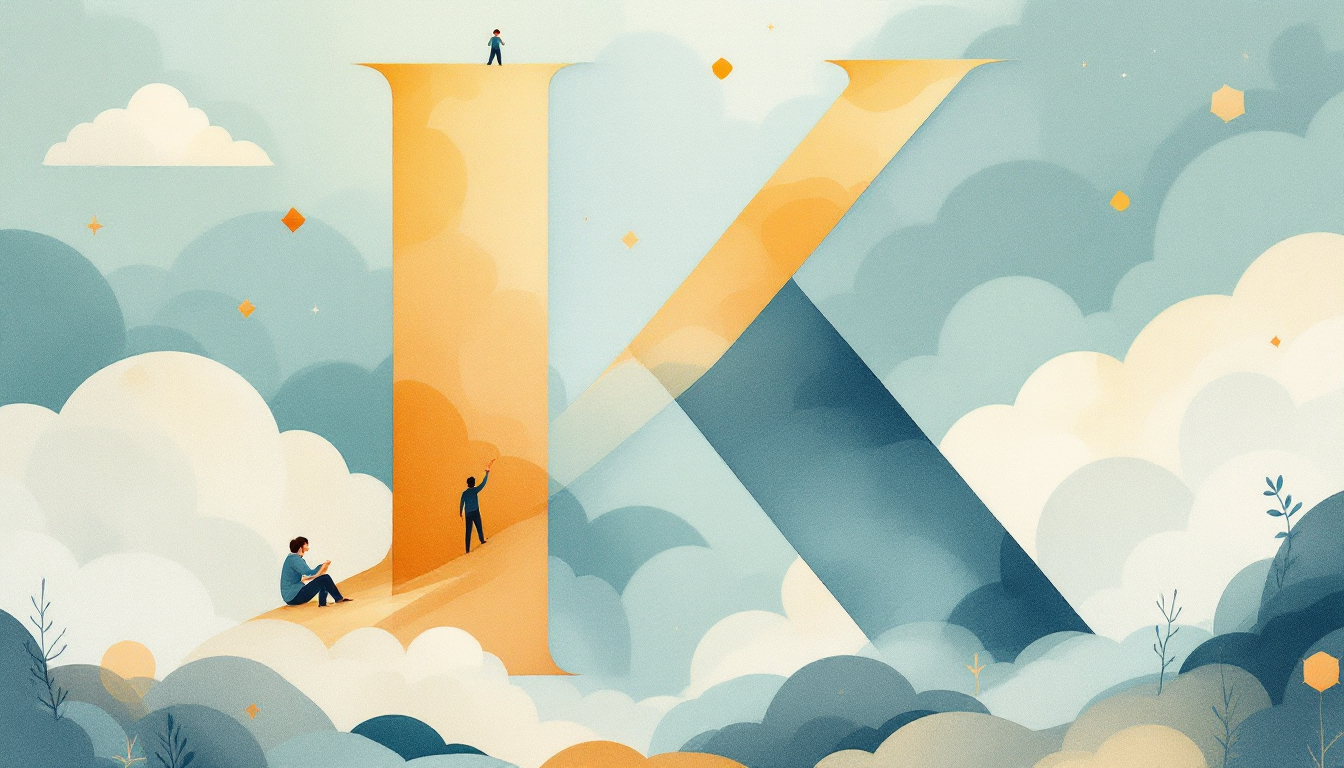
After COVID, the K-shape was tech companies versus restaurants. With AI, the K-shape is simpler: people who integrate AI into their work versus people who don't.
This isn't new. Every technology wave creates a split. Computers did it. The internet did it. Mobile did it. But those waves gave you a decade to adapt. You could be late to the internet in 2002 and still figure it out by 2008.
AI doesn't work like that. The models improve every few months. The capabilities double while you're still thinking about whether to sign up. By the time that recruiter checks back in, the thing he needs to learn will be three generations ahead of what he dismissed.
And in recruitment specifically? AI now writes job descriptions, screens applications, matches candidates to roles, schedules interviews, and drafts rejection emails. Not perfectly, but fast. The recruiters who figured this out handle triple the pipeline. The ones who didn't are still manually reading every cover letter.
This also isn't just about individuals. Countries are splitting on the same K. The US and China are pouring resources into AI. Europe is writing regulations about it. The Netherlands, despite having ASML making the machines that make AI possible, is busy taxing its knowledge workers into leaving.
The Shopify CEO called it "the dumbest thing a country can do." He wasn't wrong.
The thing nobody wants to hear
Here's the part that makes people uncomfortable: you probably need to start over.
Not your career. Not your life. Just your assumptions about what tools can do. The mental model you built about AI based on that one ChatGPT session in 2025 is wrong now. Completely. Whatever you think AI can't do, check again. Right now. Not in six months.
I'm not saying AI is perfect. It hallucinates. It gets things wrong. It occasionally produces confident garbage. But so do most coworkers, and we still find them useful.
AI is ready. Has been for a while now. The bottleneck moved to the other side of the screen.
What to actually do
I'm not going to tell you to "embrace AI" or "lean into the future." That's meaningless advice. Here's something concrete instead:
Pick one task you do every week that's repetitive and boring. Not your most important work. The stuff you dread. The formatting, the research compilation, the first draft nobody sees.
Give it to Claude or ChatGPT. Not once. For a week. Every time that task comes up, use AI instead of doing it yourself. You'll hate the output at first. You'll fix half of it manually. That's fine. By day five, you'll have figured out how to prompt it so you only fix a quarter. By week two, you'll wonder why you ever did it by hand.
That's how adoption works. Not with a revelation. With a Tuesday afternoon where you realize you saved 40 minutes on something stupid.
That recruiter will figure this out eventually. The question is whether his clients will wait, or just let AI screen their candidates instead.
Eight months is a long time to stay in the stone age.
In this series:
- I'm living the AI disruption everyone's warning about — What it's actually like to work alongside AI every day
- I watched a developer admit AI killed his business model — The industry wakes up
- Why your AI coding agent is burning tokens on browser automation — Practical token efficiency
- AI agents are hiring humans now — Yes, really
- I tried AI once. It didn't work. ← You are here

I offer hands-on consulting to help you resolve technical challenges and improve your CMS implementations.
Get in touch if you'd like support diagnosing or upgrading your setup with confidence.