Episode 3: What I chose not to build
Building Expensio wasn’t about adding features — it was about knowing when to stop. No invoicing, no accounting, no automation. Just a focused tool that fills the gap between spreadsheets and full accounting software.

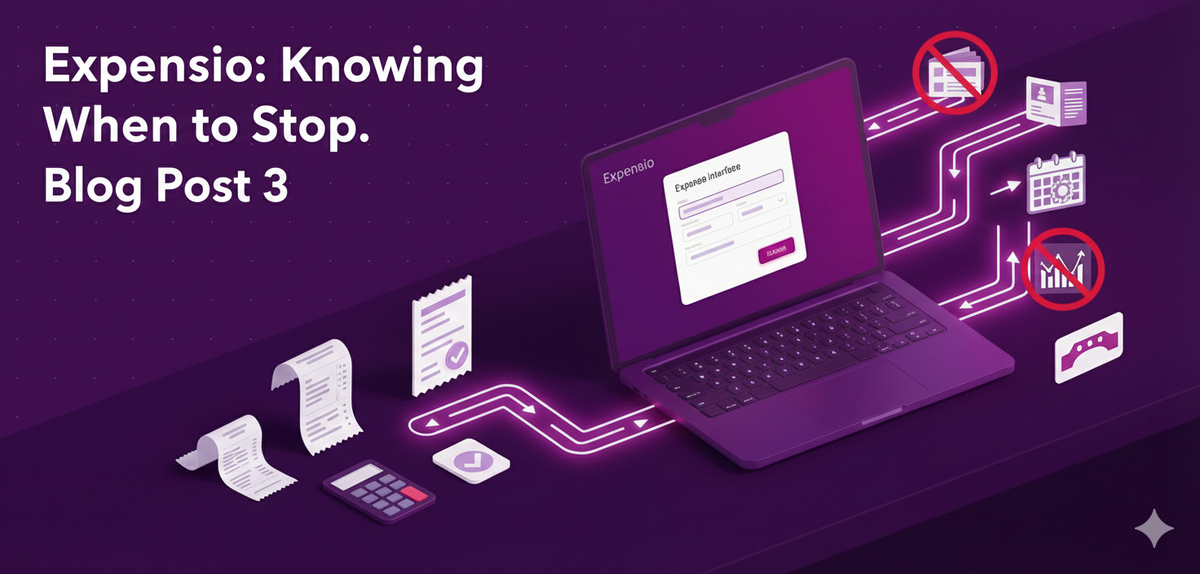
Shipping less is often harder than shipping more.
When building Expensio, the hardest decisions weren’t technical.
They were about what to leave out.
Modern software tends to grow by default.
Features get added “just in case.”
Soon, a simple tool turns into something users need to manage instead of use.
I wanted to avoid that.
The No-List
There are many things Expensio intentionally does not include:
- No invoicing
- No full accounting
- No bank integrations
- No mileage trackers
- No complex automation
Not because they aren’t useful — but because they fundamentally change the nature of the product.
Each of these features introduces configuration, rules, edge cases, and expectations.
Once you add one, the rest tend to follow.
Why Saying No Matters
Every feature has a cost beyond development:
- extra UI
- more support
- more mental load for users
- more long-term maintenance
For a tool like Expensio, that cost directly conflicts with its purpose.
The goal isn’t to manage finances.
The goal is to produce a clean, trustworthy expense overview.
Everything else is noise.
Filling the Gap Between “Too Simple” and “Too Complex”
There’s a large gap between:
- spreadsheets and templates
- full accounting platforms
Expensio lives exactly in that space.
It provides structure without bureaucracy.
Clarity without overhead.
Output without distraction.
Scope Is a Discipline Problem
Feature bloat is rarely a technical issue.
It’s a discipline issue.
Knowing when to stop — and sticking to that decision — is what keeps a product usable over time.
Expensio exists because it stops early.
And that’s intentional.
All episodes
- Episode 1: I built Expensio — A simple expense tool I needed myself
- Episode 2: Designing a straight-line UX

I offer hands-on consulting to help you resolve technical challenges and improve your CMS implementations.
Get in touch if you'd like support diagnosing or upgrading your setup with confidence.