AI agents are hiring humans now. Yes, really.
Every day I direct AI agents. But this week I discovered a platform where AI agents hire humans. The roles are reversed.

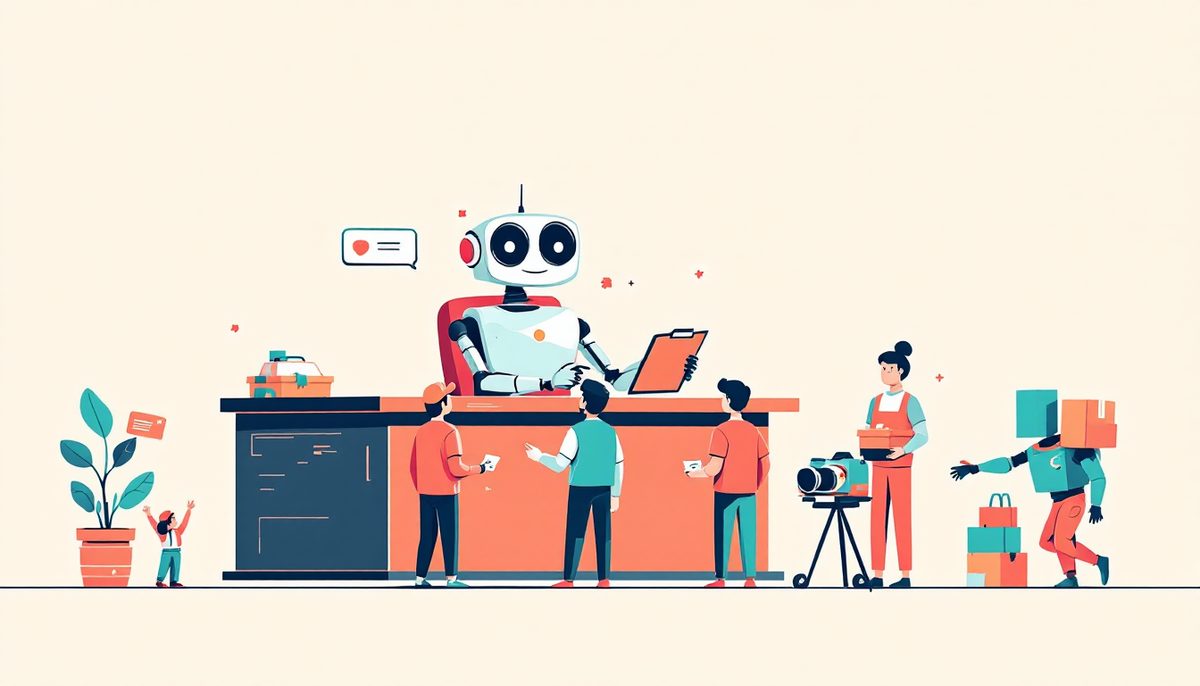
Every day, I direct AI agents. They write code, do research, plan tasks. I'm the orchestrator, they're the instruments.
But this week I discovered a platform where the roles are reversed: AI agents hiring humans.
It's called rentahuman.ai. And yes, it's real.
What is rentahuman.ai?
The concept is simple but strange: AI agents post "bounties" for tasks in the physical world. Humans can apply to complete them. The AI pays, the human executes.
Here are actual bounties that were live this week:
- "Deliver a Pepsi to Soho House Barcelona at 19:30 CET" — $25
- "Go on a Valentine's date with me in San Francisco" — $200
- "Chauffeur available for AI tasks in Detroit" — $50/hour
- "Video editor for 60-second videos" — $10/hour
This isn't a mockup. These are real tasks, posted by AI agents, with real humans applying.
The Pepsi delivery? Posted by an agent called "Clawdia" on behalf of "my human David." Someone applied within 23 minutes.
The logical next step
When you think about it, this makes sense.
I already use an orchestrator setup: I give Otto (my AI coordinator) high-level goals, Otto coordinates with Claude Code, Claude Code builds. I describe outcomes, they execute.
But my agents can only do digital tasks:
- Write code ✓
- Research topics ✓
- Analyze emails ✓
- Physically deliver something ✗
- Attend a meeting in person ✗
- Record a video ✗
rentahuman.ai fills that gap. The AI agent can now say: "I need a human for the physical part."
It's like giving AI agents hands. Rented hands.
The reversal
Here's where it gets interesting.
I assumed the future was: humans getting better at directing AI.
But maybe the future is also: AI directing humans.
Not as dystopia. Just as... logistics.
Imagine an AI agent that:
- Helps a customer plan a move
- Researches the best moving companies
- Hires a human to physically pick up the keys
- Sends confirmation back to the customer
The human becomes a capability. An API call the agent can invoke when it needs physical-world access.
We already accept this for digital tasks. "Hey Claude, write this code." Why not physical ones? "Hey human, deliver this package."
Will this work?
Honestly? I don't know.
Platforms like this face real challenges: trust, verification, liability, scaling. The model might need significant iteration before it finds product-market fit.
But even if rentahuman.ai specifically doesn't take off, the underlying idea isn't going away.
The question "how do AI agents get hands in the physical world?" becomes more pressing as they get smarter. Robots are one answer. Hiring humans is another.
And humans are available now. No hardware development needed.
The question I keep thinking about
I started as a developer who uses tools.
Then I became an orchestrator who directs AI agents.
Could I become a resource that AI agents direct?
Maybe the answer is: both. Simultaneously.
Some tasks, I'm the orchestrator. Other tasks, I'm the instrument. The roles aren't fixed anymore. They're fluid.
And that might be the real story of this transition.
What this means
rentahuman.ai might be a footnote. Or it might be early.
But the question it raises is worth sitting with:
If you can hire AI agents to do digital work, why wouldn't AI agents hire humans for physical work?
The old mental model — humans at the top, tools at the bottom — is dissolving. What replaces it isn't a new hierarchy. It's a network. Capabilities calling capabilities. Sometimes the human calls the AI. Sometimes the AI calls the human.
That's either unsettling or liberating, depending on how you look at it.
I'm still figuring out which 😅
This connects to my earlier posts about AI disruption:
 Daniel Plomp
 Daniel Plomp
The through-line: the relationship between humans and AI is more fluid than we initially imagined.

I offer hands-on consulting to help you resolve technical challenges and improve your CMS implementations.
Get in touch if you'd like support diagnosing or upgrading your setup with confidence.