When your CMS vendor can't keep up with AI
Enterprise CMS vendors are falling behind on AI tooling. A community developer built a better Sitefinity MCP server than the vendor did. Here's what that tells us about the future of enterprise development.

Last week, a Sitefinity developer named Steve McNiven published something that caught my attention: an MCP server for Sitefinity CMS. Not the official one from Progress (the vendor) — a community-built alternative that actually solves real problems.
Why does this matter? Because it perfectly illustrates the growing gap between how fast AI tooling is evolving and how slow enterprise software vendors are responding.
The MCP revolution, explained quickly
MCP (Model Context Protocol) is Anthropic's open standard that lets AI assistants connect to external tools and data. Think of it as giving Claude or Cursor direct access to your systems — your database, your logs, your CMS, whatever you expose.
Laravel shipped their official MCP server (Laravel Boost) with 15+ tools and a massive documentation knowledge base. You can ask Claude about your routes, your models, your queue jobs. The AI actually understands your application.
WordPress has multiple community MCP servers. Shopify has one. The pattern is clear: every major platform is getting AI tooling that goes beyond "paste your error into ChatGPT."
The Sitefinity situation
Progress, the company behind Sitefinity, did build an MCP server. It generates widgets for their decoupled renderer. That's it.
Here's Steve McNiven's take on why he built his own:
"Sitefinity does ship with their own MCP server. But it's entirely focused on generating widgets for the decoupled renderer. That's fine if all you need is to scaffold a new widget, but it doesn't help you with any of the actual development workflow stuff."
His community server does what developers actually need:
- Pull error logs from staging without RDP-ing into servers
- Query dynamic content types and their fields
- Check page details including all widgets and placeholders
- Switch between environments (dev, staging, production)
The inspiration? Laravel Boost. He saw what modern framework tooling looks like and built it for his stack.
The enterprise vendor problem
This isn't unique to Progress. Enterprise software vendors face a structural challenge with AI:
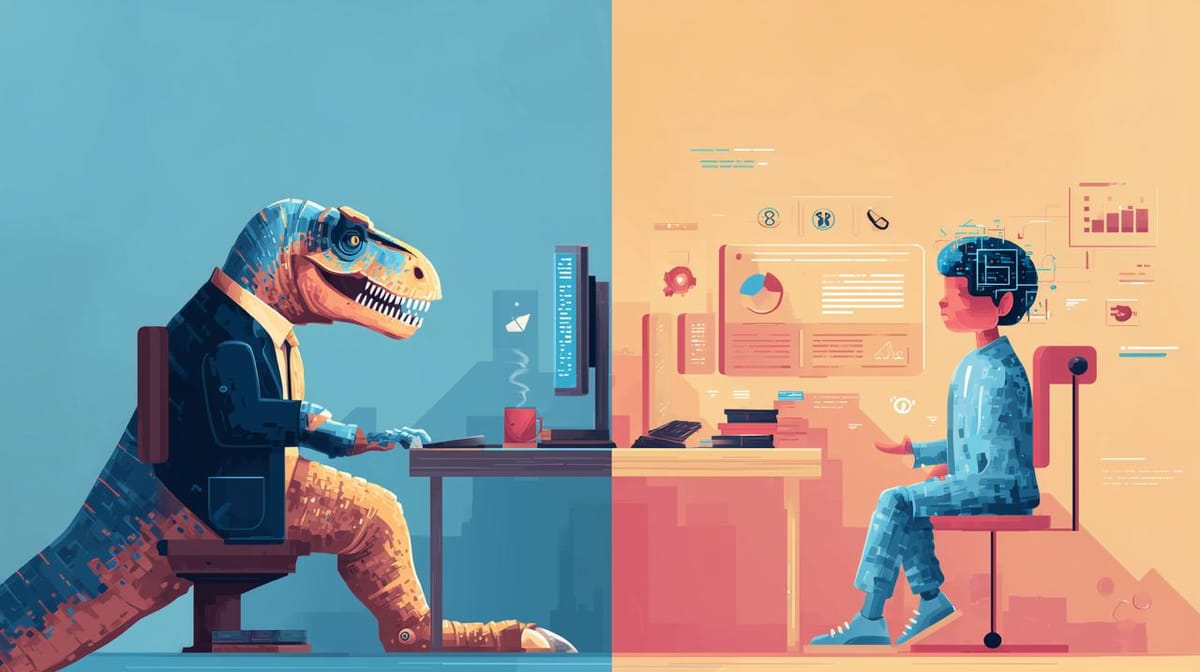
Speed mismatch. AI tooling evolves monthly. Enterprise release cycles are quarterly at best, often annual. By the time a vendor ships an AI feature, the landscape has shifted.
Wrong priorities. Vendor MCP servers tend to focus on what the vendor wants (widget generation, staying in their ecosystem) rather than what developers need (debugging, understanding existing code).
Community to the rescue. The gap gets filled by community developers who actually use the tools daily. Steve's Sitefinity MCP server has 14 tools. The official one does one thing.
What this means for enterprise developers
If you're working with enterprise CMSs — Sitefinity, Sitecore, Optimizely, Adobe Experience Manager — you're probably not getting official AI tooling anytime soon. Or if you do, it'll be limited.
Your options:
- Build it yourself. Steve's approach. If you know the platform well enough, an MCP server isn't that complex. Expose the APIs you need, document the tools, ship it.
- Wait for community. Someone else might build it first. Check GitHub, ask in community Slacks.
- Switch stacks. Harsh but real. If AI-assisted development matters to your productivity (and it should), platforms with strong AI tooling have an advantage.
I've done option 3. After years of .NET CMS work (including Sitefinity), I moved to Laravel. The ecosystem velocity is incomparable. When Laravel Boost shipped, it worked out of the box with my existing projects.
The bigger picture
We're watching a split form in the developer tools market:
Fast movers: Laravel, Rails, Next.js, modern frameworks with active communities and responsive core teams. AI tooling arrives quickly and works well.
Slow movers: Enterprise platforms with long release cycles, conservative roadmaps, and vendor lock-in priorities. AI tooling is an afterthought or a checkbox feature.
The community can bridge the gap temporarily. Steve's Sitefinity MCP server proves that. But it's a symptom, not a solution. The developers filling these gaps are doing it on their own time, often without vendor support or documentation.
If you're evaluating platforms for a new project in 2026, add this to your checklist: how fast is the AI tooling ecosystem moving? Check for official MCP servers, community tools, and general AI integration stories. The answers will tell you a lot about where that platform is heading.
Make sure to check out Steve’s work! He has been a true Sitefinity expert for many years and has helped many developers (myself included) through their sometimes “messy and challenging” journey in the world of Sitefinity 😉
I spent years building on .NET CMSs before switching to Laravel. If you're considering a similar move, let me help you.

I offer hands-on consulting to help you resolve technical challenges and improve your CMS implementations.
Get in touch if you'd like support diagnosing or upgrading your setup with confidence.