The resume is dead — but nobody dares say it
A resume is a list of places you've been. Not proof of what you can do.

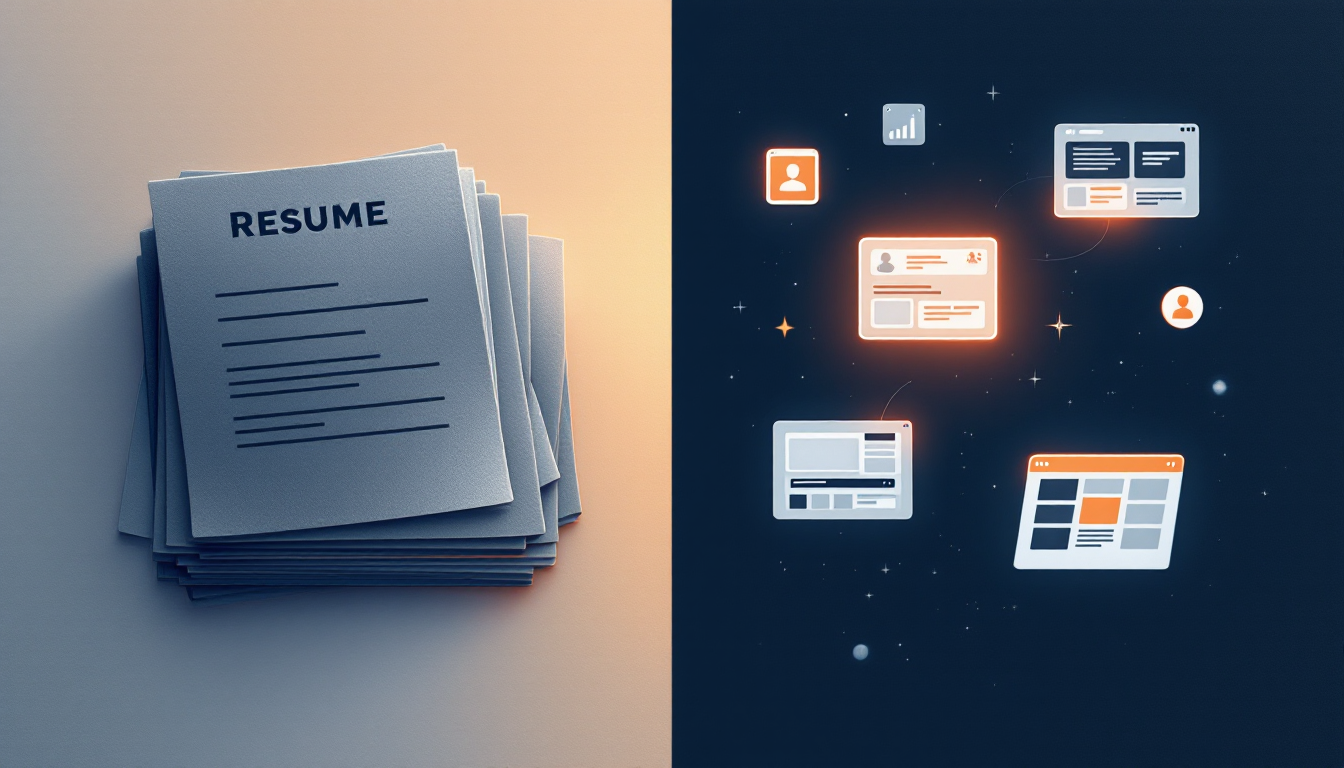
Yet we base nearly the entire hiring process on it. Screening? Check the resume. First selection? Filter resumes. AI tools? Scan resumes. The whole system revolves around a document that does exactly one thing well: tell you where someone has sat. Not whether they were any good at it.
What a resume actually tells you
A resume tells me you spent three years at Company X as a marketer. It doesn't tell me if you were good at it. It doesn't tell me whether you left because you outgrew the role or because you were stuck. It doesn't tell me if those projects you listed were your work or if you happened to be in the room.
And then there's the formatting game. Everyone lies on their resume. Not with outright fabrications, but with framing. "Responsible for digital transformation" could mean you set up the Slack workspace. "Led a team of 5" could mean you were the only one who knew how to operate the coffee machine.
We all know this. Recruiters know it, candidates know it, hiring managers know it. And yet we keep pretending the system works.
Why the resume won't die
Convenience. Resumes are easy to compare. Two columns side by side, checklist next to it, done. It gives the illusion of objectivity.
And there's fear. If you don't ask for a resume, what do you ask for? An assessment takes time. A trial day costs money. A portfolio review requires someone who can evaluate substance. That's harder than checking whether someone has "5+ years of experience."
But "5+ years of experience" means nothing. Someone can repeat the same year five times.
What's already changing
Skills-based hiring is gaining traction, slowly. The idea is straightforward: judge people on what they can do, not where they've been. Sounds obvious. In practice, companies hit three walls:
How do you test skills objectively? Assessments help, but not every skill fits a multiple-choice test. Collaboration, handling ambiguity, communication under pressure — you only see that on the job.
Hiring managers want certainty. Someone who did "the exact same job at a competitor" feels safe. Someone with the right skills but a different background feels like a gamble. Even when that gamble statistically pays off better.
Candidates don't know how to present skills. They grew up with the resume format. "Build a portfolio" sounds easy if you're a developer. If you're an office manager, it's less obvious what that looks like.
Then AI enters the picture
AI is making the resume problem simultaneously worse and less relevant.
Worse: candidates use ChatGPT to generate flawless resumes. Every bullet point reads like they single-handedly saved the company. Recruiters can no longer distinguish AI-polished resumes from authentic ones. The document that was already unreliable is now entirely useless as a signal.
Less relevant: the same AI can test skills directly. Give a candidate a realistic case, let them solve it, evaluate the output. No resume needed. No references needed. Just: can you do this or can't you?
The EU AI Act adds another layer. AI systems used in recruitment are classified as "high risk." That means transparency about how algorithms select, mandatory bias audits, and the right to human intervention. You can't blindly trust an AI that filters resumes anymore — you need to explain why someone was rejected.
Which raises an interesting question: if you can't trust humans to read resumes honestly, and you can't trust AI to filter them fairly, maybe the problem isn't the reader. Maybe it's the document.
Where this is heading
The resume won't disappear tomorrow. But it will become less central every year.
Short assessments will replace resume screening as the first filter. Not a full day, not a take-home project that eats a weekend. An hour. Enough to see if someone can think and execute, not just write.
Portfolios and projects will matter more outside of creative fields. A marketer who can show a campaign they actually built is more convincing than a bullet point that says "responsible for campaigns."
References will shift from "call my former manager" to demonstrable results. Published work, measurable impact, public contributions.
And honestly: plenty of employers will stay behind. They'll keep asking for resumes, keep filtering on years of experience, and keep complaining they can't find good people. While the best candidates are already somewhere they're judged on actual work.
What you can do now
If you're hiring: Drop "send your resume" as the only entry point. Add a short assignment, an open question, or a simple skills test. You immediately filter for motivation and ability instead of formatting skills.
If you're job hunting: Don't wait for companies to change. Build something now that shows what you can do. A blog post, a side project, a case study of your own work. Anything more concrete than a bullet point on an A4 sheet.
The resume served us well for decades. But the world changed, and the document didn't. Time to admit that.

I offer hands-on consulting to help you resolve technical challenges and improve your CMS implementations.
Get in touch if you'd like support diagnosing or upgrading your setup with confidence.