I built Expensio — A simple expense tool I needed myself
I built Expensio because I needed a simple way to create clean expense claims without heavy bookkeeping tools. A lightweight, multilingual app for quick, no-nonsense declarations.

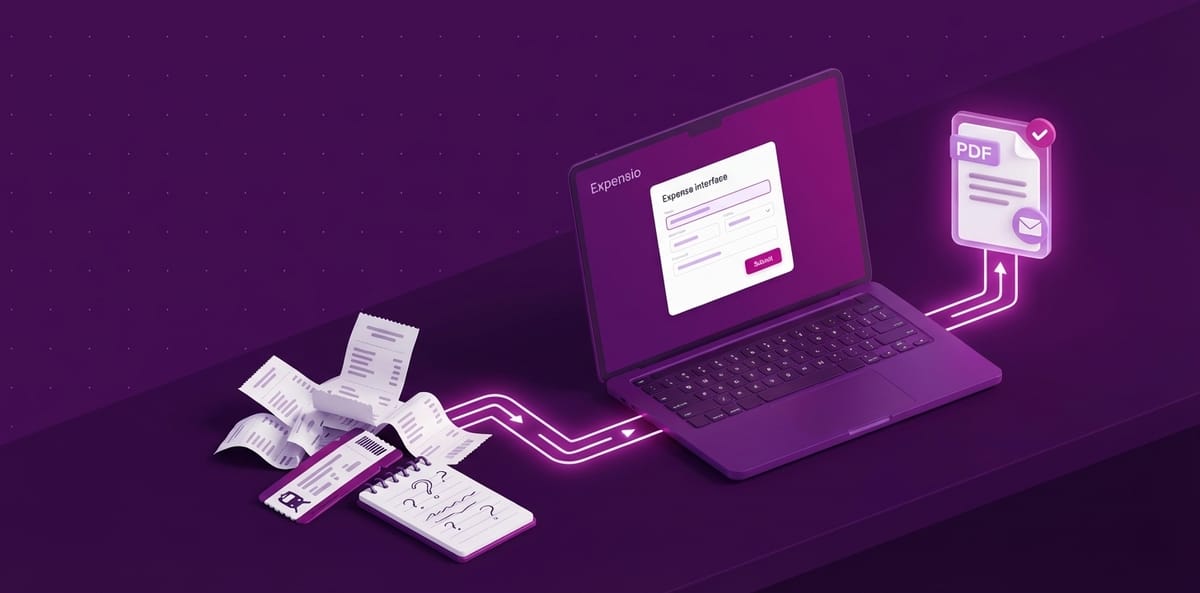
Most products start with a big idea.
Expensio started with a small frustration.
I regularly needed to file simple expense claims — in my case, mostly travel costs and a fixed-rate service I occasionally provide. Nothing fancy. No invoices, no VAT gymnastics, no bookkeeping software. Just a clean overview I could email to a foundation as a private person.
I looked around for a tool that could do exactly that.
I didn’t find one.
So I built it.
Why I built Expensio
My requirements were straightforward:
- Create a simple, clean expense claim in minutes
- Add a few expenses (like travel distance or flat-rate services)
- Export a professional-looking PDF I can send by email
- No heavy bookkeeping, no accounting dashboards, no clutter
That alone would have solved 80% of my use cases.
But I also run my own company. That meant I sometimes do need VAT-aware summaries, receipts, and proper overviews that fit within a more formal workflow. So Expensio had to support both modes:
- Private mode: no invoices, no VAT, no accounting
- Business mode: expenses with receipts, VAT percentages (0%, 9%, 21%), totals, and structured declarations
Two workflows, one lightweight product.
Keeping it intentionally simple
There are plenty of complex bookkeeping tools out there. Expensio is deliberately not one of them.
The idea was never to build a competitor to accounting suites. Instead, I wanted a straight-line experience:
- Add an expense
- Bundle expenses into a declaration
- Export and send it
No setup. No onboarding wizard. No dozens of toggles.
Just a practical, no-nonsense tool that gets out of the way.
Multilingual from the start
Because expense workflows are universal in Europe, I built Expensio in three languages from day one:
- Dutch
- English
- German
Most of the target audience sits somewhere within that triangle, and making the product understandable without relying on English alone felt like an important quality-of-life decision.
A few subscription tiers (just enough)
Expensio is not meant to be a large-scale SaaS engine. But running servers and maintaining features does come with a cost. So I added a few small subscription tiers — nothing exaggerated, just enough to differentiate power use from casual use:
- A free tier for simple private users
- Professional and Business tiers with extras such as CSV export, unlimited categories, branding, and more
The idea is simply to keep the product sustainable.
What’s inside (at a glance)
Without turning this into a feature list, a few highlights:
- Expense tracking with or without units (e.g., hours × rate, km × price)
- VAT-aware calculation when needed
- Declarable bundles of expenses (concept vs. submitted)
- Clean PDF templates
- Contact management (e.g., organizations, foundations, clients)
- A straightforward dashboard
- Multi-language interface
- No bookkeeping overhead
It’s built to feel lightweight and predictable — something you can use without thinking about it.
What I didn’t build
Just as important are the things I didn’t add:
- No invoicing
- No full accounting
- No bank integrations
- No mileage trackers
- No complicated automation
These tools already exist in abundance. Expensio fills the gap between “too simple” and “too complex.”
Who it’s for
I originally built Expensio for myself, but it naturally fits:
- freelancers
- small business owners
- volunteers filing claims for foundations
- organizations that need clear expense summaries
- people who hate bookkeeping tools but still need tidy PDFs
If you want a simple expense flow without adopting a full accounting system, it might be exactly the kind of tool you’ve been looking for.
Try it
Expensio will be live next week!
I wrote an in-depth breakdown of how I built Expensio — from the workflow design to the technical architecture.
Subscribe if you want to read these kinds of maker-focused deep dives.