Episode 1: Why I started building dotmap
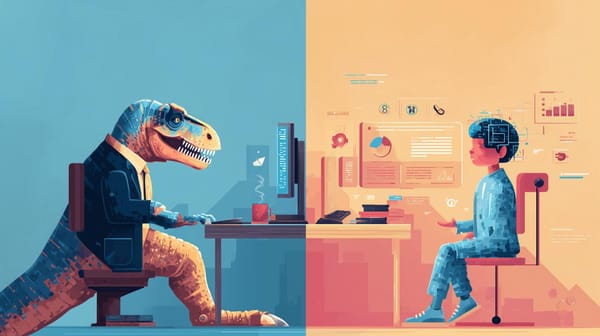
Discovering tech professionals shouldn’t be this difficult. Episode 1 explores the fragmentation across ecosystems, the inspiration from Laramap, and why dotmap began as a simple attempt to rethink visibility.

I’ve been noticing something odd in the tech world for years now, and it still feels unresolved.
There are tons of talented people out there — developers, designers, engineers, data people, cloud architects, freelance product folks — but the moment you need someone outside your own little bubble, finding them suddenly gets weirdly hard.
If you’re in the Laravel corner, you know exactly where to look.
.NET has its own hangouts.
JavaScript has dozens of communities that barely talk to each other.
Design, DevOps, data… all separate islands.
We keep talking about “the tech community” like it’s one big happy family, but in reality it’s a bunch of disconnected mini-worlds.
That fragmentation is perfect for going deep, but terrible when you just want to find someone.
And the same question kept nagging at me:
why is it so damn hard to discover good tech people when they’re literally everywhere?
The same loop, every single time
Whenever I needed someone — a freelancer, a co-founder, a specialist — I’d end up bouncing between:
- LinkedIn (way too noisy)
- tiny Discord servers (too scattered)
- private Slack groups (too closed off)
- job boards (feels like a transaction)
- ecosystem-specific forums (way too narrow)
I could find a Laravel dev.
I could find a .NET consultant.
I could find a TypeScript/React expert, a DevOps engineer, or a designer.
But never in the same place.
Never with the same ease.
Never with the feeling there was one shared map of it all.
It started to feel like visibility in tech had less to do with skill and more to do with being in the right tribe at the right moment.
And that just felt wrong.
How Laramap flipped the switch
One day I stumbled on Laramap: a dead-simple map showing Laravel developers all over the world.
It wasn’t a marketplace.
It wasn’t a social network.
It didn’t try to do everything.
It just answered one question: “Where are the Laravel people?”
That simplicity stuck with me.
I loved it — but it was also felt limited.
Because my own world isn’t just Laravel. I move between .NET, JavaScript, full-stack projects, cloud stuff.
And I kept thinking: why doesn’t something like this exist for everyone in tech?
One place.
Stack-agnostic.
Ecosystem-neutral.
Not controlled by an algorithm.
Just a way for people to be visible.
A bigger world needs a bigger map
The more I looked, the clearer it became: there are loads of independent tech professionals who don’t really have a proper home online.
Freelancers especially.
They don’t want to maintain five different profiles.
They don’t want to be 100% dependent on LinkedIn.
They don’t want to drown in platform noise.
They don’t want to be locked inside one ecosystem.
What they do want is pretty straightforward:
“I’m here. This is what I do.”
And they want companies to actually be able to find them — without endless keyword hunts, without platforms that prioritize addiction over discovery, without job boards that reduce everyone to a job title.
Just simple, honest visibility.
Why I ended up building this
I didn’t wake up one day thinking “I’m going to build a product.”
There was no grand plan or lifelong dream.
It started with a question that wouldn’t shut up.
A frustration I kept running into in my own work.
A curiosity about what visibility could look like if we started from a blank slate.
At some point the idea stopped being a thought experiment and turned into something I actually wanted to make — even if it was just for myself at first.
That’s how dotmap was born.
A small side experiment.
A personal scratch-my-own-itch project.
A quiet attempt to fix something that kept annoying me.
And now it’s slowly turning into something real.
Next part
In part 2 I’ll talk about the concept itself: why a map, how the first sketches came together, and how I tried to keep everything simple while still making it useful for the entire tech world.
Part 2 – designing the concept
coming soon.
I offer hands-on consulting to help you resolve technical challenges and improve your CMS implementations.
Get in touch if you'd like support diagnosing or upgrading your setup with confidence.